 Farnborough
 Nice
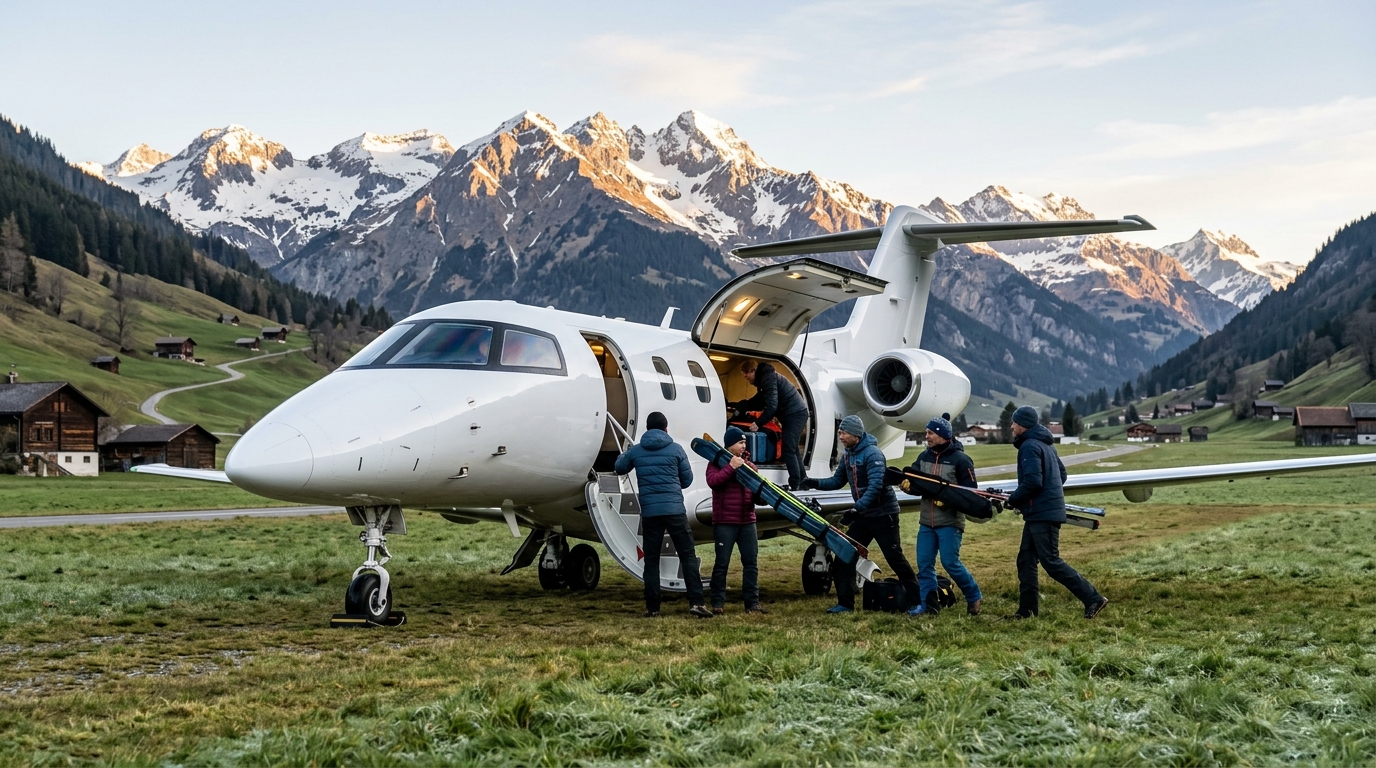
What Makes the PC-24 Different: The Only Light Jet Designed to Land on Rough, Short Strips
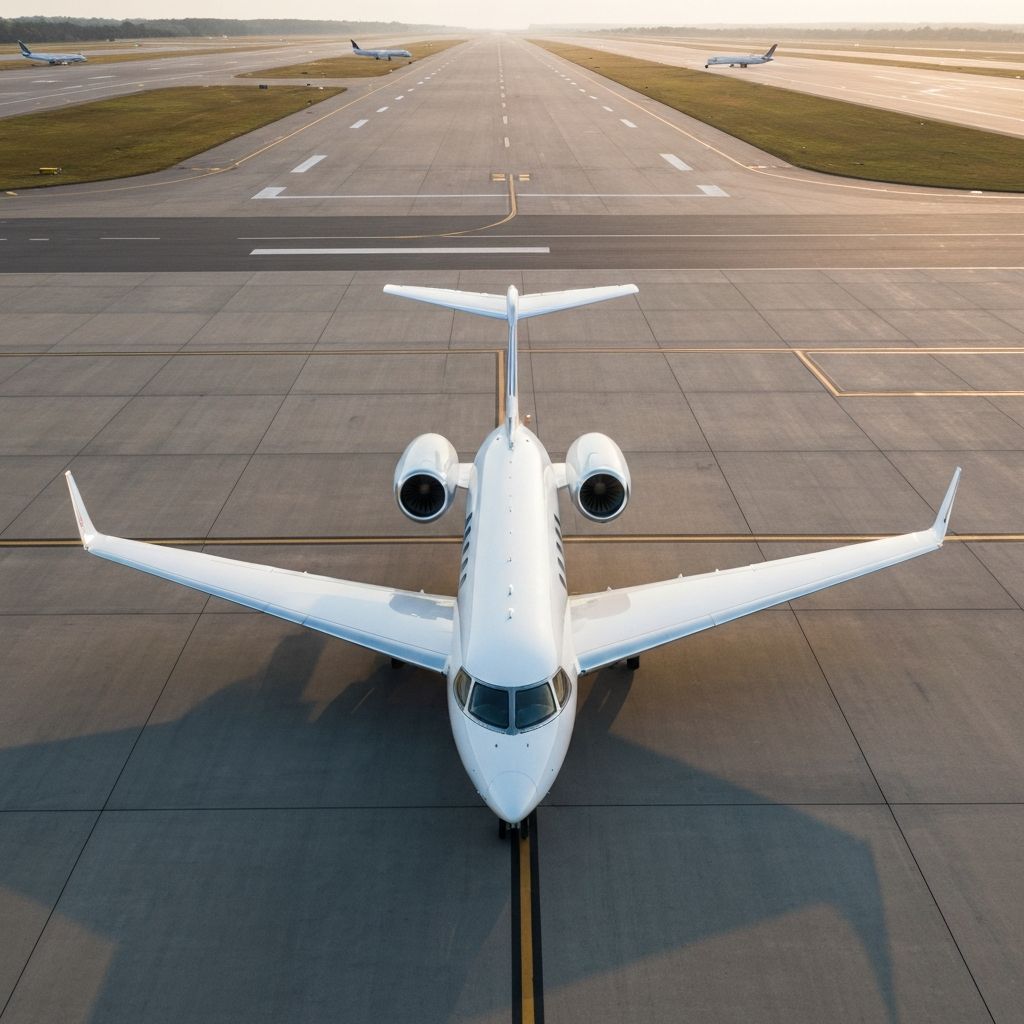
A light jet certified to land on gravel is a rarity, and the Pilatus PC-24 is the one that does it, with a cargo door wide enough to roll a fully assembled mountain bike aboard. Pilatus, the Swiss manufacturer based in Stans, built its first jet around a brief that most manufacturers avoid: carry a proper cabin, but never depend on a long, smooth runway. The aircraft entered service in 2018 and has been refined since.
The engineering follows the brief. Two Williams FJ44-4A engines sit on a straight wing with large flaps, and the aircraft carries thrust reversers and a long-stroke undercarriage with low-pressure tyres. Pilatus quotes a maximum cruise speed of about 440 knots and a range of roughly 2,000 nm (3,700 km) with four passengers. Typical performance figures put take-off at around 2,700 ft (820 m) at maximum weight and landing at about 2,500 ft (760 m), though any real booking should rely on the operator's own performance calculation for the day.
The gravel approval matters most. The PC-24 is certified for operations on unpaved and gravel surfaces, subject to the strip's condition and the operator's own approval. Phenom 300E and Citation XLS+ operators will not take those risks, and a broker who wants a pilot to look at a strip should ask whether the operator holds that authorisation.
That is the real definition of this aircraft: a light jet whose first design question was where it can stop, not how fast it can cruise.
The Cabin and the Cargo Door: What Actually Fits On Board, From Skis to Golf Bags to Dogs
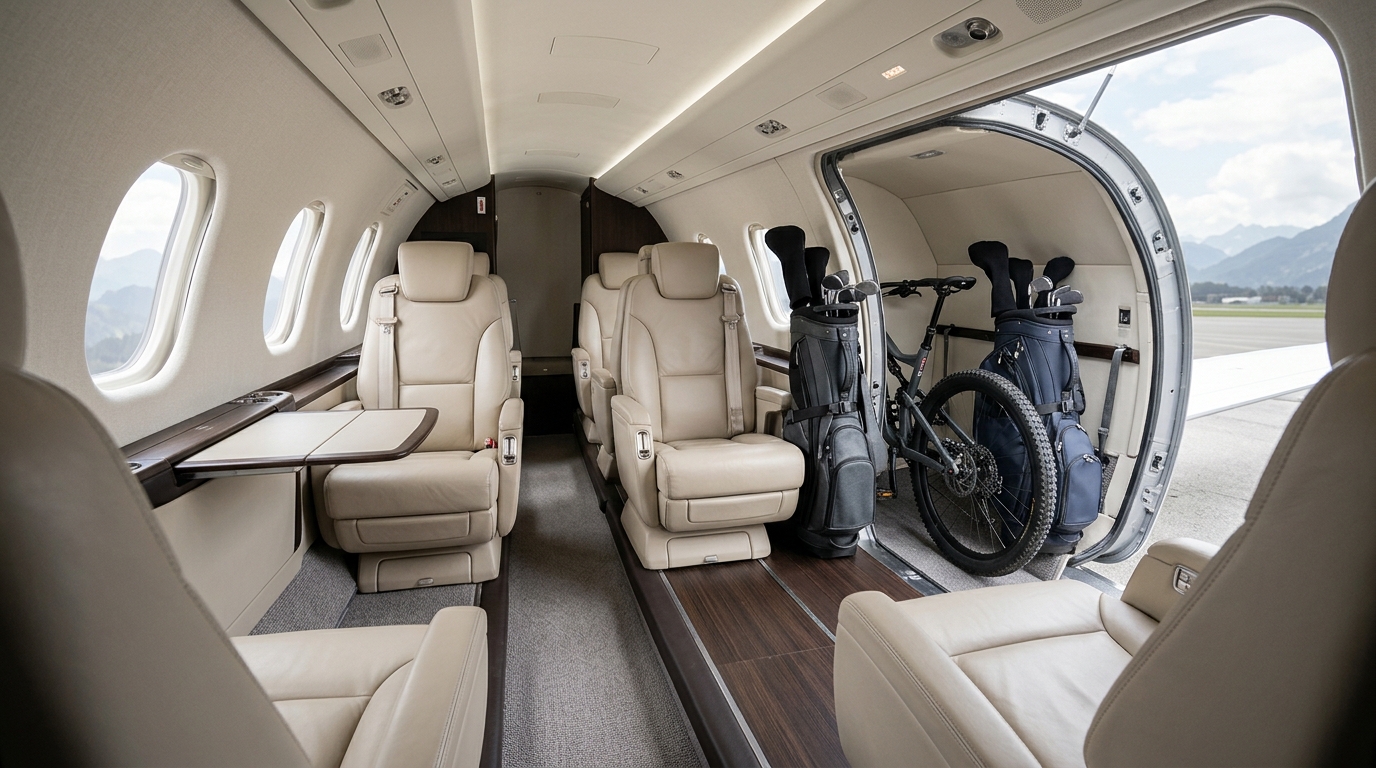
The rear cargo door is 4 ft 3 in wide and about 4 ft 2 in high, which is the feature no other light jet matches. It opens onto a hold that can be loaded from outside the aircraft, so a pair of bikes, four sets of skis, golf bags or a folding wheelchair go in without being threaded down the aisle. Pilatus has also shown the PC-24 carrying a small vehicle during promotional flights, a demonstration rather than a normal charter request.
The cabin itself is 5 ft 6 in wide and about 4 ft 11 in high, with a flat floor and a flexible layout of between six and eight seats on most charter aircraft, and up to ten in the maximum configuration. Large windows and a bright cabin make it feel more open than the numbers suggest. A lavatory with a door sits at the rear, and many aircraft offer a belted seat for an additional passenger.
Compare those figures with the Citation XLS+, whose cabin stands 5 ft 8 in high and 5 ft 6 in wide, and the Challenger 350 at 6 ft high and 7 ft 2 in wide. Nobody stands upright in the PC-24; the Challenger 350 is the aircraft for that. The PC-24 trades headroom for hold space and a door that opens straight onto it.
Dogs are the practical test of the layout. A large dog in a crate rides in the cabin on many operators' aircraft, because the door is big enough for the crate to be loaded without tilting it. Always confirm the operator's pet policy and give the crate dimensions in advance. Boxed equipment such as ski bags, a golf set or a cello case follows the same rule: send measurements to the broker before the quote is confirmed, not at the aircraft steps.
Airfields the PC-24 Can Reach That Bigger Jets Can't: Short Runways, Private Strips and Remote Destinations
At Samedan (LSZS) in the Engadin valley, the runway is typically around 1,800 m with steep terrain on both sides, and operators treat it as a special-performance airfield. The PC-24 manages it comfortably in the right conditions, and it is one of several Alpine fields where a light jet with short-field performance matters. Check the current AIP and the operator's crew approvals for any specific date.
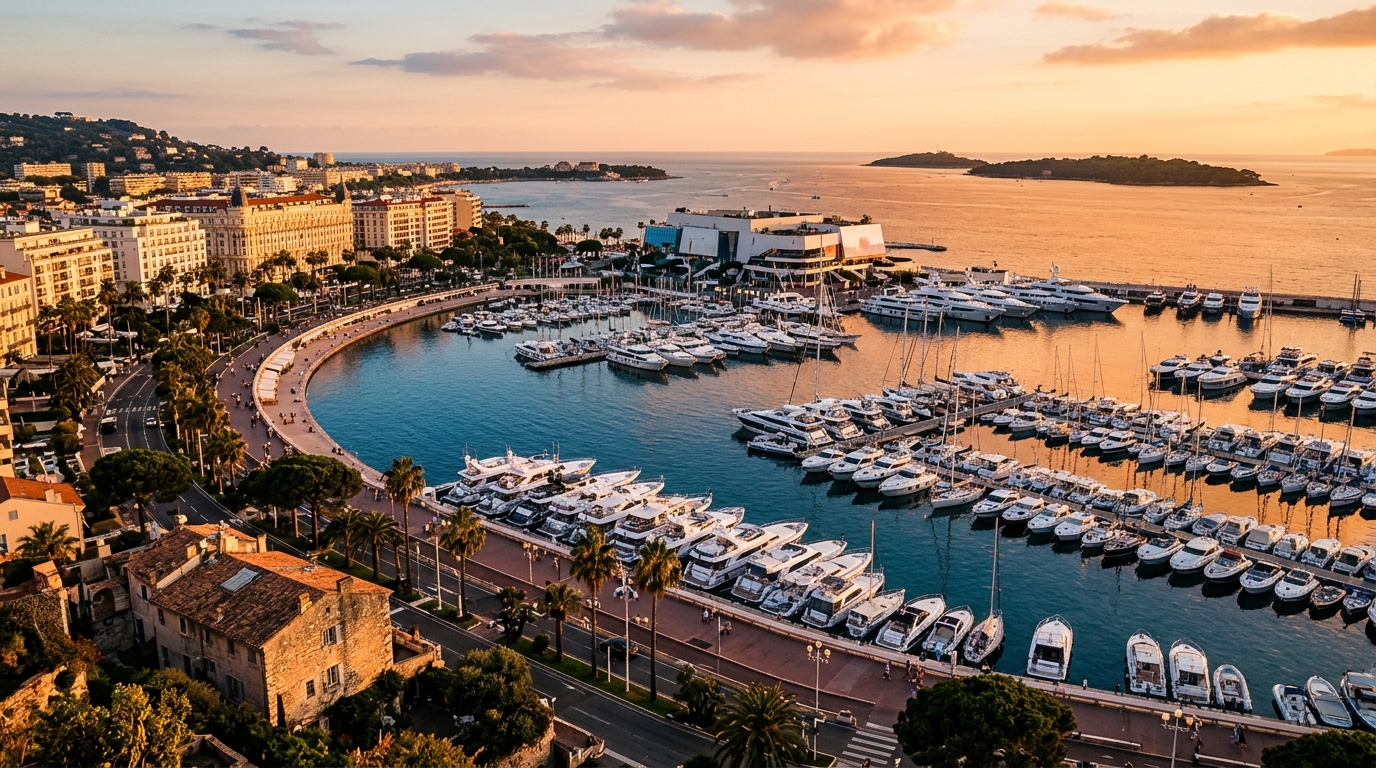
The same logic applies across southern Europe and the Alps. Cannes-Mandelieu (LFMD) has a runway of roughly 1,600 m, which suits a PC-24 but limits larger business jets. La Môle (LFTZ) for Saint-Tropez, Sion (LSGS) for Verbier and Crans-Montana, and Gstaad-Saanen (LSGK) are all candidates, though several carry weight limits, curfews or prior-permission requirements. A broker should check each one against the aircraft's weight on the day.
Private strips are the second category. Estates in the Scottish Highlands, farm strips in France and Italy, and grass or gravel strips in Scandinavia can sometimes be used with the landowner's permission and a site assessment by the operator. Expect the operator to require a minimum usable length (often around 3,000 ft or 900 m for a PC-24), a surface inspection, and a diversion plan. Treat any private strip as a few days of paperwork, not a same-day booking.
The PC-24 also suits mixed flights where cargo and passengers need to arrive together. A film crew with a camera case, a mountain guide with rope and skis, or a family moving a boat engine to a coastal villa all need the door more than the speed. For that type of sector, a Phenom 300E or Citation XLS+ would need a second aircraft or a separate freight movement.
The usual limits still apply. A short runway is not a free pass: wet surfaces, high temperatures and altitude all reduce performance, and the operator decides whether the day is workable.
PC-24 vs Phenom 300E vs Citation XLS+ vs Challenger 350: Range, Comfort and Hourly Cost Compared
The PC-24 loses on range to the Challenger 350 and wins on cargo and field length against everything else, so the comparison depends on the trip. The Embraer Phenom 300E has a published range of about 2,010 nm and a cabin 5 ft 1 in wide and 4 ft 11 in high, so it matches the PC-24 on headroom and edges it on range, but its baggage hold is accessed from the outside only in a limited way and takes smaller items. The Cessna Citation XLS+ has a range of roughly 1,860 nm and a 5 ft 8 in high cabin, noticeably taller than the PC-24's 4 ft 11 in.
The Bombardier Challenger 350 is a larger aircraft class. It has a range of about 3,200 nm, a cabin 6 ft high and 7 ft 2 in wide, and seats eight to ten. That is a different tier of comfort, and it can fly from London to Dubai with a stop or to the US East Coast on a good day. The PC-24 cannot.
In the author's estimate of current European charter rates, which vary with operator, season and positioning, hourly pricing runs roughly as follows:
- Phenom 300E: £2,800 to £3,400 per flight hour
- PC-24: £3,300 to £4,000 per flight hour
- Citation XLS+: £3,200 to £3,900 per flight hour
- Challenger 350: £4,200 to £5,200 per flight hour
Price per seat favours the aircraft that carries the most people for the money. With eight passengers, a Challenger 350 can be cheaper per head than a PC-24 carrying six, even at a higher hourly rate. If the group is four or fewer and heading to a short strip, the PC-24 is often the better value because the alternative may be a longer road transfer from a larger airport.
The decision rule is simple. Choose the PC-24 for a sector under 1,500 nm when the runway is shorter than about 4,000 ft (1,220 m), the surface is unpaved, or the load includes bulky items. Choose the Phenom 300E or Citation XLS+ for a straightforward paved-runway trip with a lower budget. Choose the Challenger 350 above 1,800 nm or when you need standing headroom.
How to Charter a PC-24: Availability, Typical Pricing and the Questions to Ask Your Broker
The PC-24 fleet is much smaller than the Phenom or Citation fleets, so availability is tighter and last-minute positioning can add cost. Allow at least three to five working days for a standard airport booking and ten days or more for a private strip, which needs a site assessment. Peak ski weekends and summer Saturdays book out first.
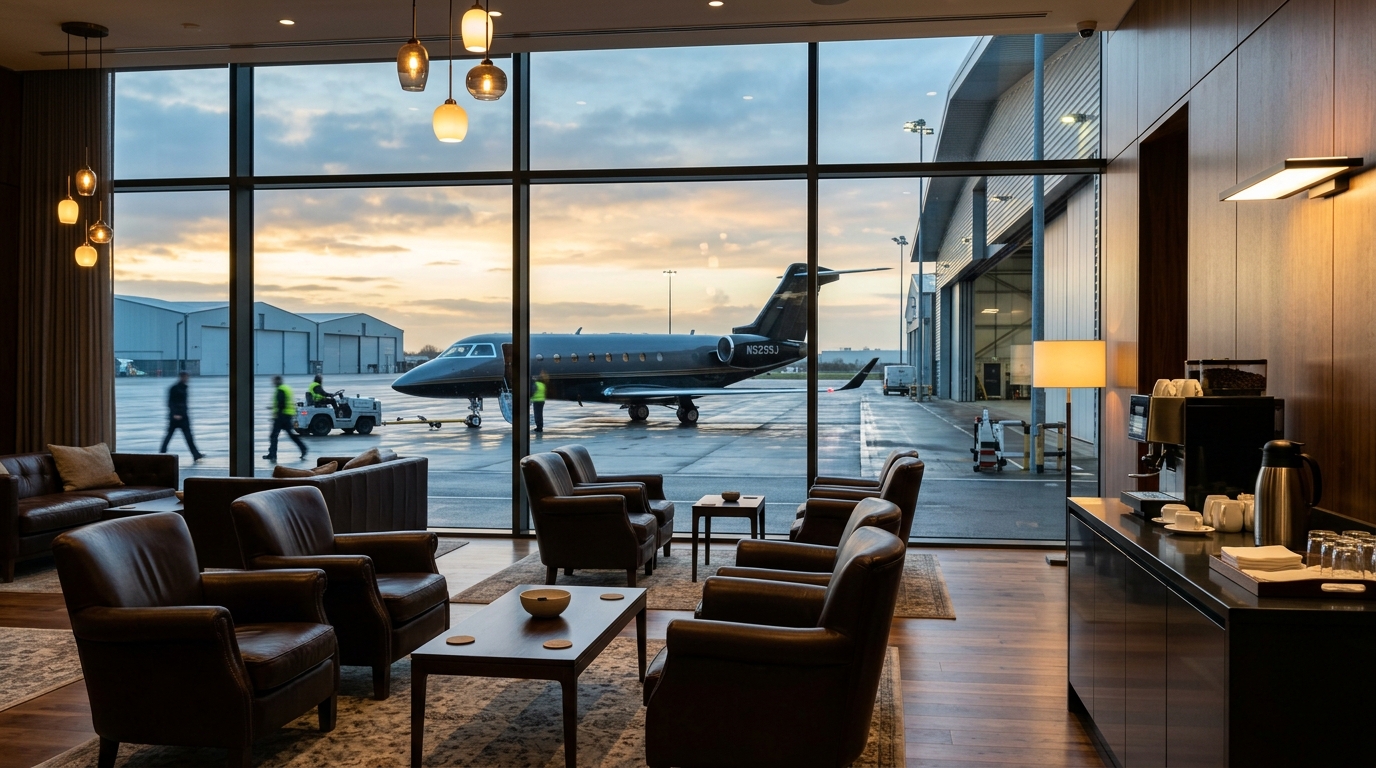
For a representative price, a one-way sector from Farnborough (EGLF) to Cannes-Mandelieu (LFMD) takes about 1 hour 40 minutes and typically runs to £10,000 to £14,000 at current market rates. Farnborough to Samedan (LSZS) takes about 1 hour 45 minutes and typically costs £11,000 to £15,000. A return trip is priced as two one-way sectors, or as a return with an overnight stay, and the final figure depends on the operator's positioning.
Those figures are estimates. Quotes move with fuel, landing fees, handling charges and whether the aircraft is already in the UK.
A broker should be able to answer the following before you confirm a Pilatus PC-24 charter:
- Does the operator hold approval for the specific strip, and has a pilot assessed the surface for this date?
- What is the performance calculation for your passenger and baggage weight, in the forecast temperature?
- What are the cargo dimensions the door can accept, and who loads the aircraft?
- Does the operator allow pets, and in which part of the cabin?
- What are the landing fees, curfew, prior-permission and handling arrangements at the destination?
- How many seats will the aircraft actually have on the day, and where is it positioned?
The working method is to send the broker your destination, exact passenger numbers, and the dimensions and weight of every bulky item. If the broker comes back with a performance check and a named strip approval, the PC-24 is likely to be the right aircraft. If the runway is longer than 4,000 ft and everything fits in a standard hold, ask for a Phenom 300E quote alongside it and compare the two.