Why Lake Como has become Europe's quieter alternative to the Riviera
Lugano's LSZA runway measures just 1,367 metres, ruling out anything larger than a light jet before a single villa has even been shortlisted, and that constraint says more about Lake Como's appeal than any description of the water ever could. This is a destination that has stayed deliberately hard to scale.
Nice and Cannes built their reputations on volume: hotel terraces stacked three deep in August, marina berths booked a year out, an airport that handles over 60 flights an hour at peak. Como took the opposite path. The lake's northern and central basins are ringed by villas that have belonged to the same families, or the same three or four hedge funds, for generations, and there is no equivalent of the Croisette here.
The drive from Milan Malpensa (LIMC) to Bellagio takes upward of 90 minutes in weekend traffic, which has done more to protect the lake's character than any planning restriction. Visitors who fly into Malpensa on a scheduled route and then sit in traffic on the SS36 arrive having already spent the discretion they came for. That gap between Milan's major hub and the lake is exactly why a private jet to Lake Como has become the only sensible way in for anyone who wants to land, transfer, and be on the water inside the hour.
Milan itself sits close enough to matter. Events in the city, whether Fashion Week showrooms or a private equity closing, can be paired with a night or two at the lake without the trip feeling like two separate journeys. That proximity, combined with three usable airports within a 50-minute transfer of the water, is what has turned Como into a year-round destination rather than a summer house address.
Lugano, Linate, or Bergamo: choosing the right airport for a Como arrival
The lake has no airport of its own, and no realistic prospect of gaining one given the surrounding terrain; the mountains rule out anything beyond the short Lugano-style strip already built into the valley floor. That absence is precisely why the choice of arrival airport carries so much weight when planning a trip here, and why it deserves more attention than the villa itself.
Lugano (LSZA) sits closest to the water, roughly 30 minutes by road to Como town or a shorter run by helicopter transfer arranged directly from the apron. Its single runway is short at 1,367 metres and sits in a valley that demands a specific instrument approach, which caps arrivals at light jets and the smaller end of the midsize category. It also sits across the Swiss border, so passengers clear Swiss customs rather than Italian, which matters for anyone travelling with firearms, certain currency declarations, or a tight connection window.
Milan Linate (LIML) suits the business traveller: an 8-minute taxi from the runway to central Milan, and a genuine option for pairing a Como stay with meetings in the city. Its 2,442-metre runway takes anything up to a Bombardier Challenger 350 or Dassault Falcon 2000LXS without difficulty, though slot restrictions during Fashion Week and major trade fairs push lead times out to two or three weeks. The transfer from Linate to Bellagio runs close to 75 minutes depending on which side of the lake you're headed to.
Bergamo Orio al Serio (LIME) is the workhorse: a longer runway, fewer slot constraints, and a well-equipped FBO that handles anything from an Embraer Phenom 300E to a Bombardier Global 7500 without difficulty. The trade-off is distance; the transfer to the lake's western shore runs 55 to 65 minutes, and the airport shares apron space with high-volume scheduled traffic, which can add to the taxi sequence at peak times.
Deciding between them for a private jet to Lake Como comes down to aircraft size and group size as much as anything else. A couple travelling on a light jet with flexible timing does well out of Lugano's short transfer; a group of eight arriving with a week's luggage, or anyone needing Milan meetings either side of the lake stay, is generally better served by Linate or Bergamo.
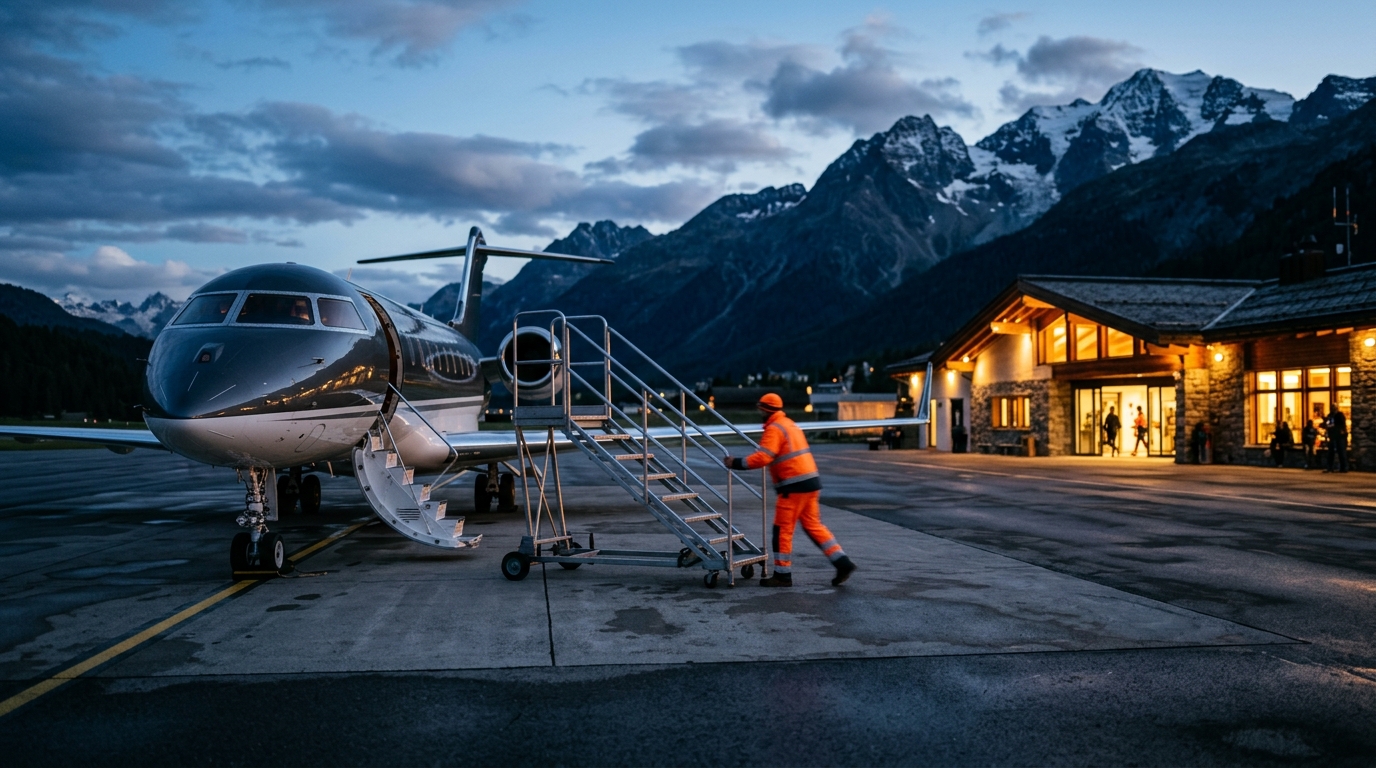
Matching the aircraft to a short Alpine hop, not a long-haul brief
A flight from London to Lake Como rarely exceeds 1 hour 45 minutes in the air, which changes the maths on which aircraft actually makes sense compared with a longer European or transatlantic sector.
For Lugano specifically, the short runway restricts the realistic shortlist to aircraft with a landing distance under roughly 1,200 metres: the Embraer Phenom 300E, which seats up to nine and has a published balanced field length of 3,209 feet (978 metres), or the Pilatus PC-24, built from the outset for shorter and less prepared strips. Both handle four to eight passengers comfortably on a sector this short, with baggage capacity enough for a week's stay rather than a weekend bag.
Groups landing at Linate or Bergamo have more room to work with. The Cessna Citation Longitude, with a 6 ft 3 in stand-up cabin and a range of 3,500 nautical miles, is comfortably oversized for a London-Milan sector but useful when the same aircraft needs to reposition onward to a longer leg later in the trip. For eight or more passengers travelling together, the Bombardier Challenger 350, with a cabin 7 ft 2 in wide and 6 ft 1 in high, seats up to ten and adds meaningful room to spread out on the short hop without the operating cost of a heavy jet.
What doesn't make sense is booking a long-range aircraft like the Bombardier Global 7500 or Gulfstream G650ER for a sector this short. Both are built for 12-hour-plus missions and carry the fuel reserves and crew complement to match; deploying one for a 100-minute hop to Milan wastes the aircraft's actual capability and adds several thousand pounds to the charter cost for no benefit in comfort or speed.
A London Farnborough (EGLF) to Lugano charter on a light jet such as the Phenom 300E typically runs £14,000 to £18,000 one-way, depending on aircraft positioning and lead time; the same route into Linate or Bergamo on a midsize jet like the Citation Longitude runs closer to £19,000 to £24,000 one-way. That pricing gap is exactly why matching the aircraft to the sector matters so much when booking a private jet to Lake Como: the wrong airframe adds cost without adding capability.
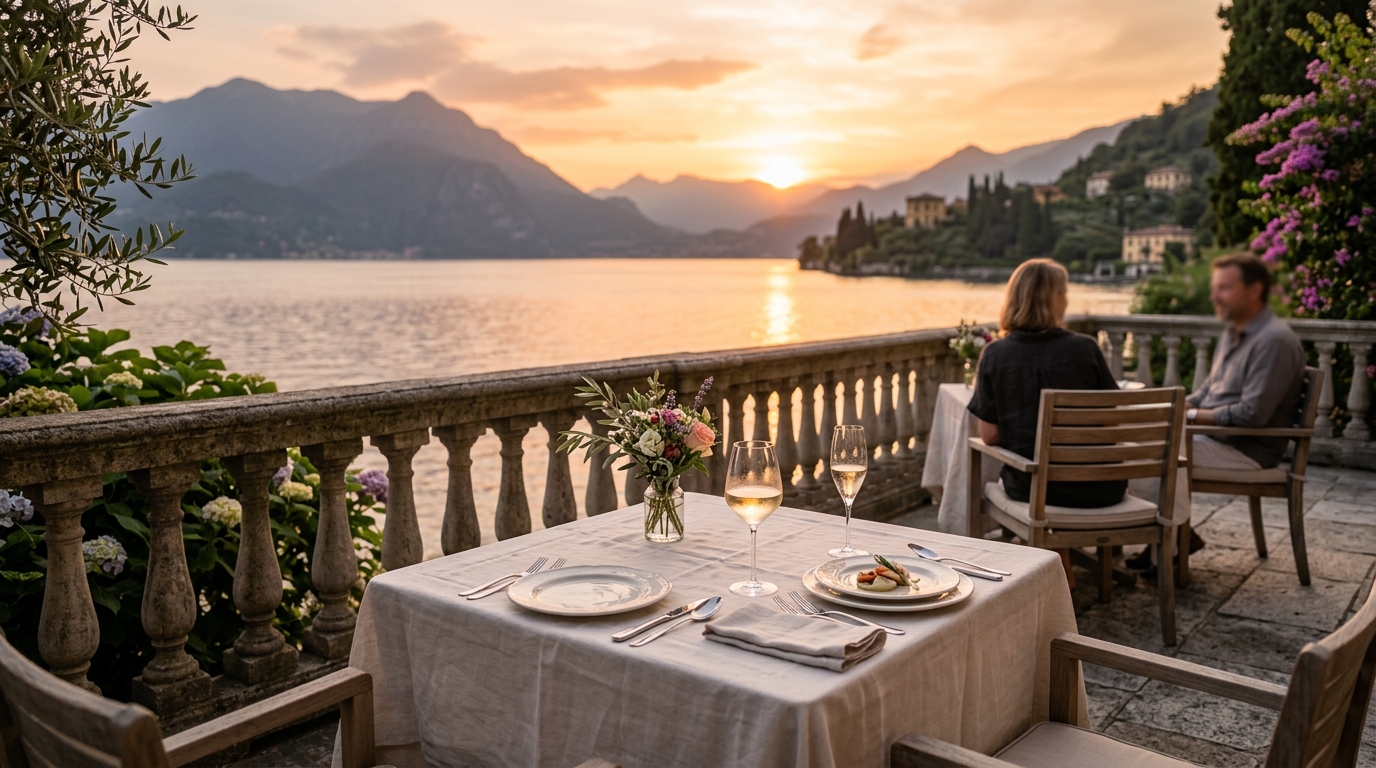
Where to land and stay: Bellagio, Cernobbio, and the lake's private villa circuit
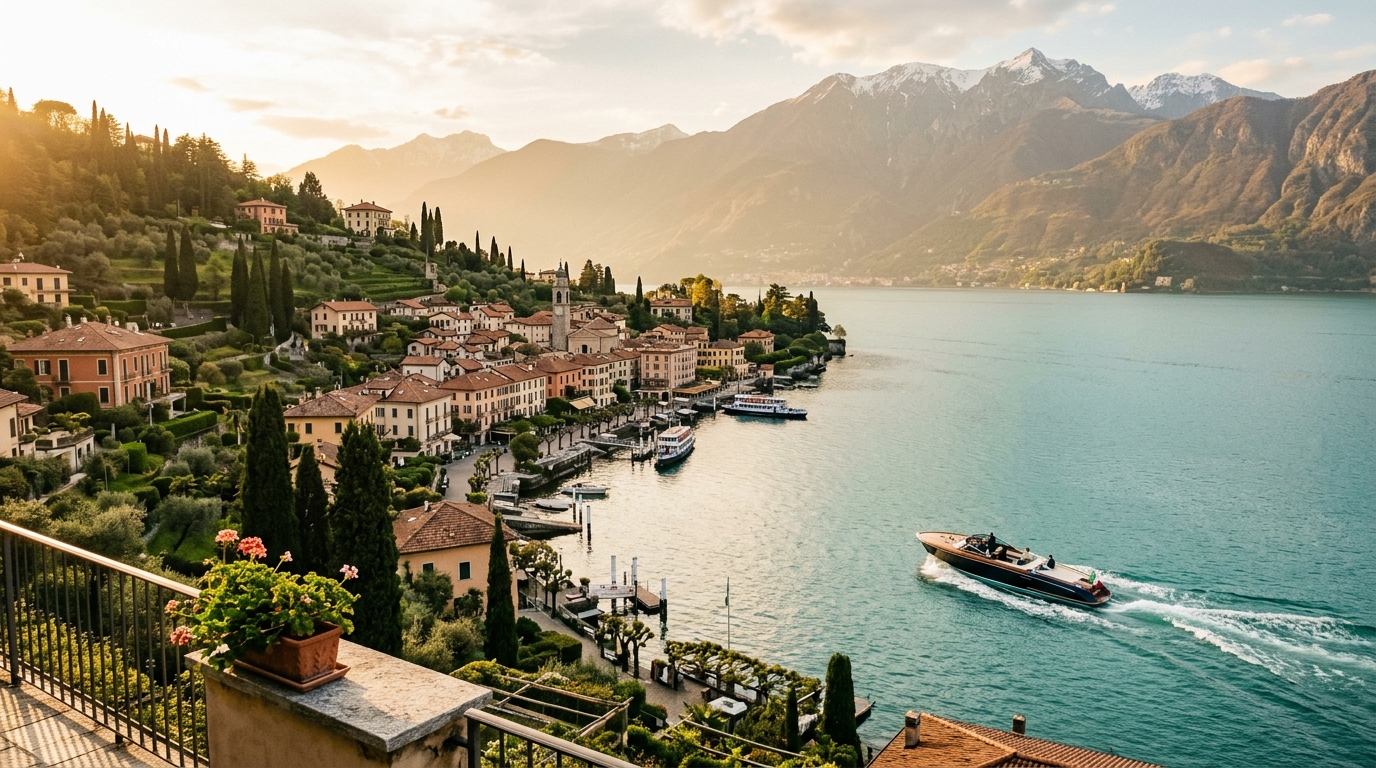
Bellagio sits at the point where the lake's three branches meet, roughly 45 minutes from Lugano by road, and most villas along this shoreline are reached by water taxi rather than by driving to the front door.
From Lugano, a private transfer to Bellagio takes around 45 minutes by car followed by a 10-minute crossing, or closer to 25 minutes door to door by helicopter, which several operators arrange directly from the airport apron. Villas along this stretch, many with their own boathouses and jetties, rent by the week in peak season and expect guests to arrive with minimal luggage handling required on the ground.
Cernobbio, on the lake's southwestern shore, runs on a different rhythm. Villa d'Este anchors the town and has hosted the Ambrosetti Forum, Europe's largest gathering of policymakers and business leaders, every September since 1975; guests attending that week book aircraft slots at Linate or Bergamo months in advance, because Lugano's limited apron space fills first. Outside forum week, Cernobbio functions as a quieter base with a 15-minute transfer to Como town by road.
The villa rental market splits along the same lines as the airport choice. Properties on the eastern shore near Varenna favour guests arriving via Lugano, given the shorter combined flight and transfer time; the larger estates near Cernobbio and Como town suit parties flying into Linate or Bergamo, where the extra cabin space of a midsize or larger aircraft has already been factored into the group size the villa is built to host.
Como town, at the lake's southern tip, works as a practical alternative to either shoreline retreat: a funicular runs up to Brunate for lake views, and the hydrofoil network links every major village in under 40 minutes, which suits guests who would rather base centrally and move by water than commit to one stretch of shoreline.
Booking smart: shoulder-season timing and pairing Como with Milan or Monza
Aircraft availability into Lugano opens up by roughly two to three weeks of extra lead time in May, June, and September compared with the July and August peak, when slots can disappear a month out. That gap is the clearest argument for booking a private jet to Lake Como outside the high summer window if the dates are flexible at all.
September carries a second advantage beyond the weather: the Italian Grand Prix at Monza falls in early September most years, and the circuit sits under an hour's drive from Como's southern shore. Fans pairing race weekend with a lake stay should expect Linate and Bergamo slots to book out three to four weeks ahead of the race, since Monza's own airfield has no facility for business jets of any size.
Pairing a Como trip with Milan business follows a simpler calendar. Fashion Week in late February and September pushes Linate to capacity, and anyone flying in for meetings either side of a lake stay should book the aircraft first and let the villa dates follow, rather than the reverse; slots at Linate during those two weeks are typically committed six to eight weeks out.
For a straightforward leisure trip with no calendar collision, the lead time drops considerably: a light jet into Lugano can often be confirmed inside 72 hours during shoulder season, which is part of why the lake has become a genuine long-weekend option for London-based owners rather than strictly a summer fixture booked months ahead.