 Farnborough
 Nice

Why the Landing Airport Matters More Than the Departure Airport When Flying Into London
A Gulfstream G650ER that touches down at Northolt (EGWU) puts its passengers in Mayfair in roughly 30 minutes, while the same aircraft at Stansted (EGSS) adds another 40 minutes of road. That gap decides whether a morning meeting happens at all.
The departure airport is usually fixed by where you live or where your business is. The landing airport is the real variable, and it is the one most brokers treat as an afterthought. Anyone arranging a private jet to London should settle it before the aircraft, because the airport determines slot availability, customs handling and the length of the final leg.
The capital has seven airfields that matter to business aviation: Farnborough (EGLF), Biggin Hill (EGKB), Northolt (EGWU), Luton (EGGW), Stansted (EGSS), Heathrow (EGLL) and Southend (EGMC). None is best in the abstract. Each wins on a particular combination of origin, destination and arrival hour.
Three questions sort them. How long is the transfer to your actual door? Can the airport accept your aircraft at your arrival time? And can you clear customs without waiting? Everything below follows from those three.
Matching the Airport to Your Destination: Mayfair, the City, Canary Wharf, the Home Counties
Start with the address, not the runway. Typical off-peak road times, which can stretch by 20 to 30 minutes in the morning peak, break down like this.
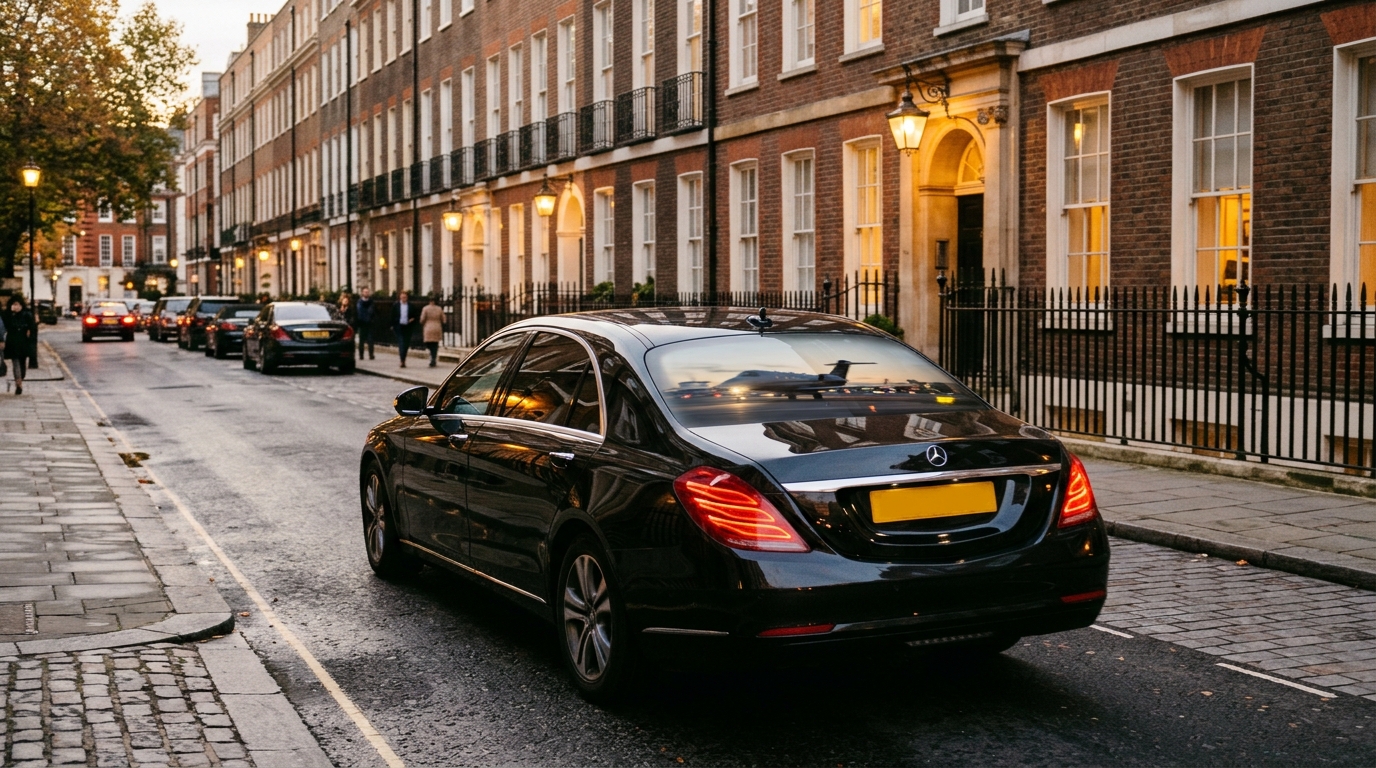
For Mayfair and the West End, Northolt is the clear winner at about 30 minutes, since it sits 11 miles to the west. Heathrow follows at 35 to 45 minutes, and Farnborough and Biggin Hill both run to 50 to 60 minutes. Luton and Stansted land nearer 60 to 75 minutes.
For the City, Biggin Hill and Northolt are close to level at roughly 45 to 55 minutes, though Northolt gets slower as the A40 clogs. Luton and Stansted are viable at about an hour. Farnborough is the weakest for the City, often exceeding 70 minutes because the M3 and A3 funnel into the same bottlenecks.
For Canary Wharf, Biggin Hill is usually best at around 35 to 45 minutes via the A21 and the Blackwall Tunnel approach. Southend, 40 miles to the east, delivers a similar 50 minutes and a calmer approach. Anyone heading to Docklands who lands at Northolt has chosen the wrong side of the capital.
For the Home Counties, the answer is local. Surrey and Hampshire belong to Farnborough, whose terminal is under 30 minutes from Guildford and Camberley. Hertfordshire and Bedfordshire point to Luton, 35 miles north of Mayfair but minutes from the M1. Essex and Cambridgeshire belong to Stansted.
A useful rule: if your destination is outside the M25, choose the airport on your side of it. If it is inside, the shortlist is Northolt, Biggin Hill and Heathrow, all within a 55-minute transfer.
Arriving from the US, the Gulf and Europe: Customs, Immigration and Range Considerations
The origin shapes the arrival hour more than any preference does. New York Teterboro (KTEB) to London is around 6 hours 45 minutes eastbound in a Gulfstream G650ER (7,500 nm range, 8 ft 2 in cabin width) or a Bombardier Global 7500 (7,700 nm range, 8 ft 0 in cabin width). An evening departure from New Jersey lands in the small hours or at first light.
That timing is where the choice gets interesting. Farnborough's weekday operating window typically opens at 07:00, so a 05:30 arrival is a problem, while Stansted and Luton accept earlier movements, subject to noise quotas. A transatlantic passenger who lands at Stansted at 05:45 and is in the City by 07:00 beats the one circling for a Farnborough slot.
Dubai (OMDB) to London takes about 7 hours in a Falcon 8X (6,450 nm range, 7 ft 8 in cabin width) or a Global 7500. Gulf departures often schedule a mid-morning arrival, which suits Northolt and Farnborough, though both require extra permissions for heavy long-range types. Check runway length before the airport: Northolt's is 1,687 m, which leaves little margin for a fully fuelled ultra-long-range jet departing again.
Europe is simpler. Geneva (LSGG) is 1 hour 35 minutes and Nice (LFMN) about 2 hours. A Phenom 300E (cabin width 5 ft 1 in, up to 6 passengers) or a Citation Longitude (cabin width 6 ft 0 in, 8 to 9 passengers) can use any of the seven airports, including the shorter-runway ones.
For customs, non-UK arrivals must clear Border Force. Farnborough, Biggin Hill, Luton and Stansted have clearance on site with minimal waiting, typically under 10 minutes. Northolt can clear international arrivals but needs advance notification, and Southend is similar. Passengers who skip the notification step lose the time they saved on the transfer.
On cost, a New York to London sector in a G650ER typically runs to £90,000 to £120,000 one-way at current market rates. A Nice to London sector in a Phenom 300E typically costs £12,000 to £18,000, with Geneva to London at similar levels.
Northolt, Farnborough, Biggin Hill and Luton Compared: Slots, Curfews and Runway Limits
These four attract most of the arrivals, and each has a constraint that catches the unprepared.
Northolt is an RAF station that also hosts civil business aviation. It is capped at 12,000 movements a year, which makes slots scarce at peak hours, and it is limited to business aviation. Its 1,687 m runway rules out some heavier long-range aircraft at maximum weight. If your aircraft qualifies and a slot exists, it is the quickest route to central London.
Farnborough has a 2,440 m runway and the most polished terminal in the group. It operates under an annual movement cap, with weekday hours roughly 07:00 to 22:00 and shorter weekend windows, so late-night arrivals risk being refused. It is the preferred choice for Surrey, Hampshire and the south-west, but a poor choice when the City is your destination.
Biggin Hill has a 1,802 m runway and a weekday window of around 06:30 to 22:30. It is the best-placed for Canary Wharf and the south-east of the capital, and its earlier opening beats Farnborough by roughly 30 minutes. Its restriction is runway length, which excludes the biggest cabins at full fuel.
Luton has a 2,160 m runway and operates around the clock, subject to a night noise quota. That makes it the relief valve when Farnborough is full or closed. A Luton arrival into Hertfordshire or north London, with a transfer of 50 to 60 minutes, often beats a congested alternative that has a longer drive and a queue for the apron.
Heathrow's 3,902 m runway can accept anything, but its slot regime and handling fees make it the choice mainly when you are connecting onward. Stansted's 3,048 m runway and 24-hour operation suit awkward-hour arrivals into Essex or Cambridge. Southend, with a 1,605 m runway, works for Docklands and light jets.
In practice, brokers rank airports in this order: slot first, aircraft limits second, transfer third. A perfect airport you cannot use is worth nothing, which is why a good charter operator names a primary and a fallback before takeoff.
Ground Handling and Transfers: Getting from Touchdown to the Door in Under an Hour
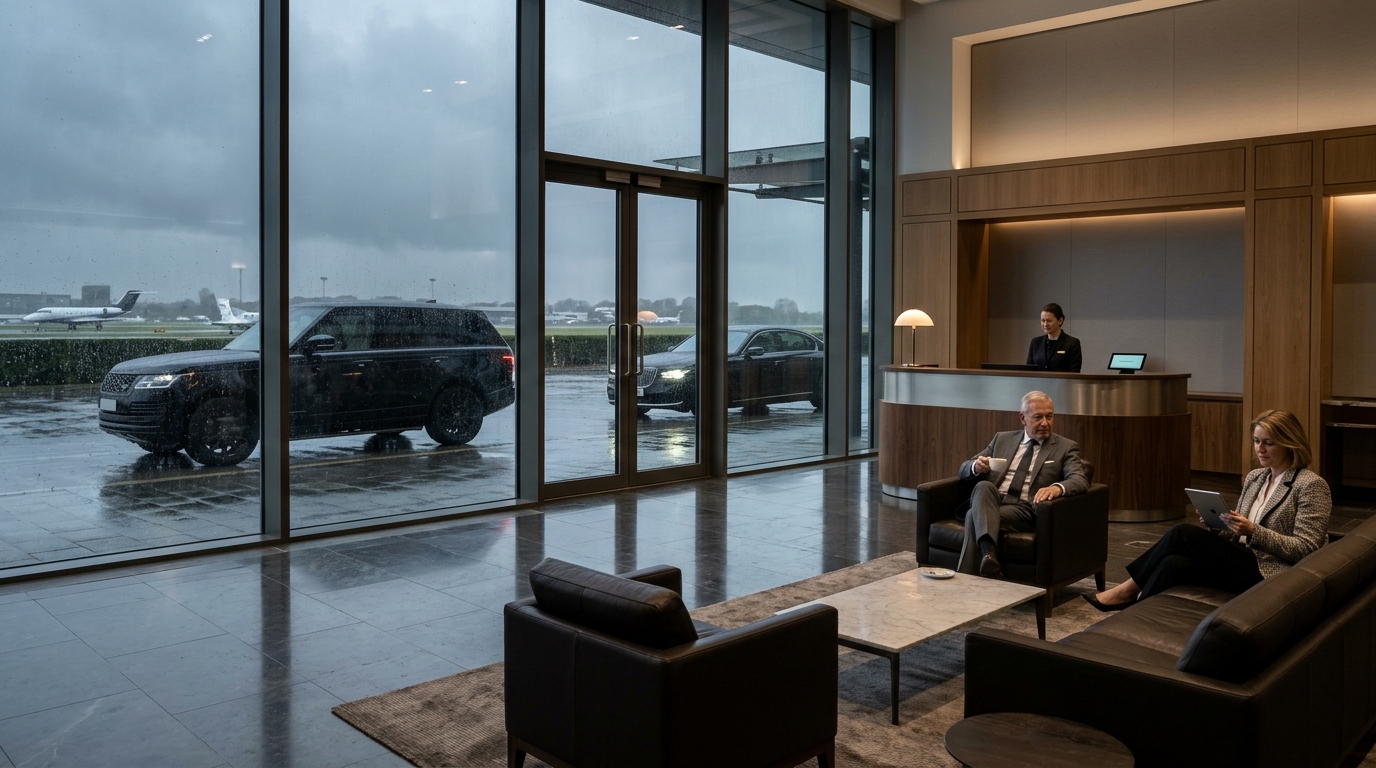
The door-to-door time is won on the apron, not on the motorway. A well-run handler has the car at the aircraft steps, bags transferred directly, and customs officers pre-briefed, so the gap from wheels-down to engine-off to vehicle is under 15 minutes.
That leaves about 45 minutes for the road, which works for Northolt, Biggin Hill and Heathrow to central addresses, and for Southend to Canary Wharf. It is a stretch for Farnborough to the West End, and not realistic for Stansted to the City at peak hours.
Three practical steps make the difference. First, pre-clear customs and passenger details at least 24 hours ahead, with full passport data supplied. Second, book the car by specifying the drop-off postcode, not the airport, so the driver can plan around the day's closures. Third, for a time-critical arrival, ask about a helicopter shuttle: a short hop from an airfield to a central London heliport, such as Battersea, takes under 20 minutes and removes road variability altogether.
For the best result, treat the transfer as part of the booking, not an extra. A broker who quotes the aircraft and leaves the car to chance is quoting half a journey.
If you are planning a private jet to London from New York, Dubai, Geneva or Nice, the working method is simple. Fix the address and the arrival hour, check the aircraft against each airport's runway and curfew, and then pick the airport that clears customs fastest. The airport that wins on one trip will not win on the next, and that is exactly why the choice deserves more thought than the departure.