Can your pet travel in the cabin?
A dog can spend a two-hour flight from Farnborough to Nice beside its owner, yet still be refused the return journey if its route into Great Britain has not been approved for pets. The freedom to share a private cabin is a considerable advantage; permission to cross a border is a separate matter entirely.
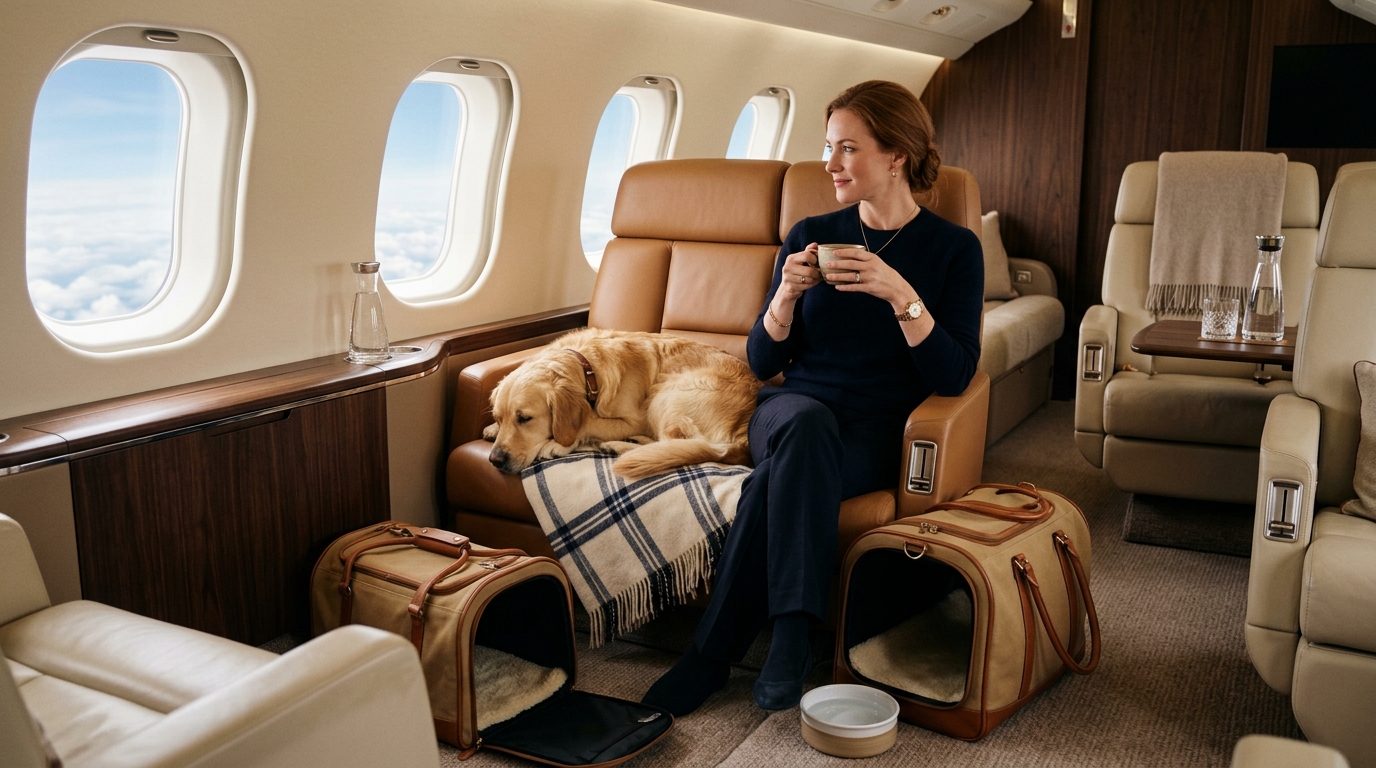
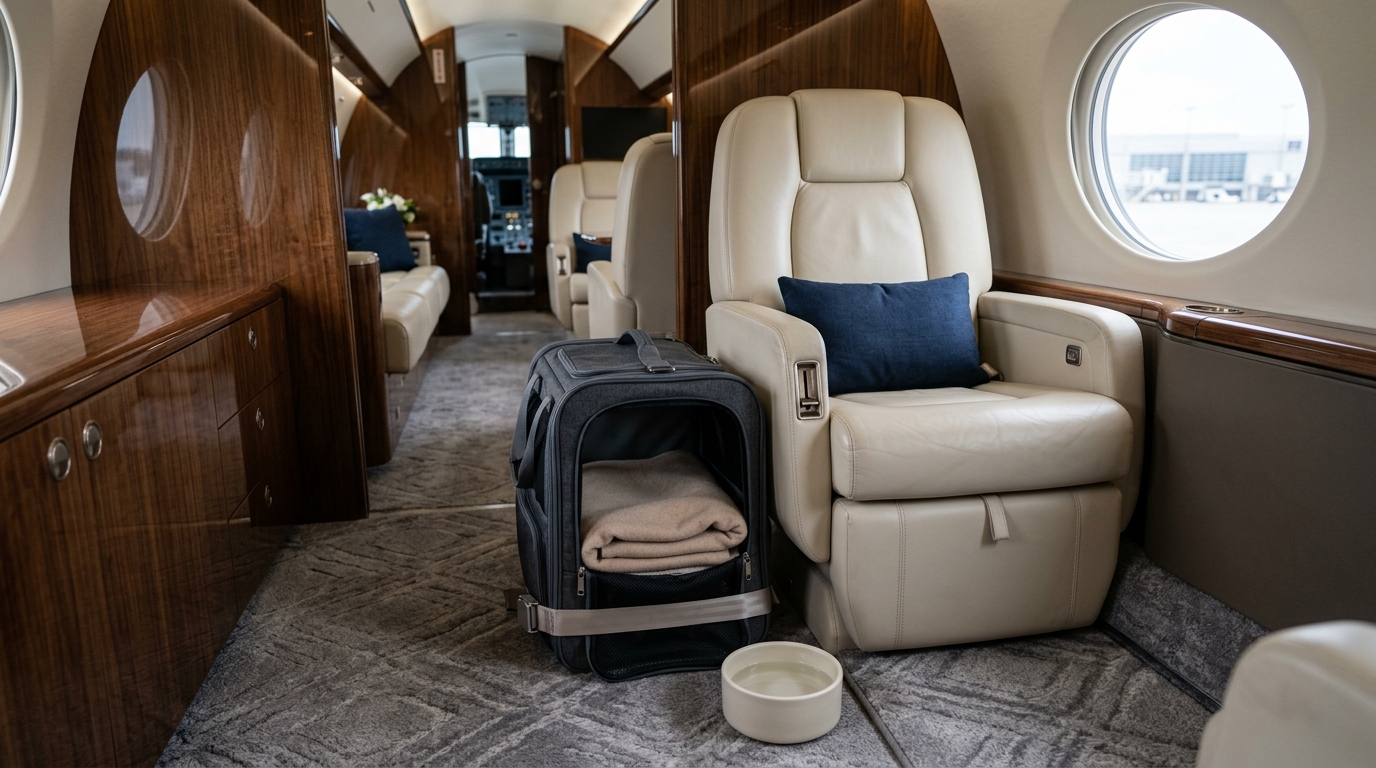
Many charter operators welcome dogs and cats in the passenger cabin, including animals too large to fit beneath a seat. That does not mean every aircraft, crew or owner accepts them. Your broker must secure the operator’s agreement before confirming the charter, including where the animal may sit and how it must be restrained for take-off, landing and turbulence.
Some operators require a suitable carrier throughout the flight. Others allow a harness secured to an approved restraint once airborne, subject to the crew’s instructions. An unrestrained dog on a leather seat is not an entitlement that comes with paying for the whole aircraft.
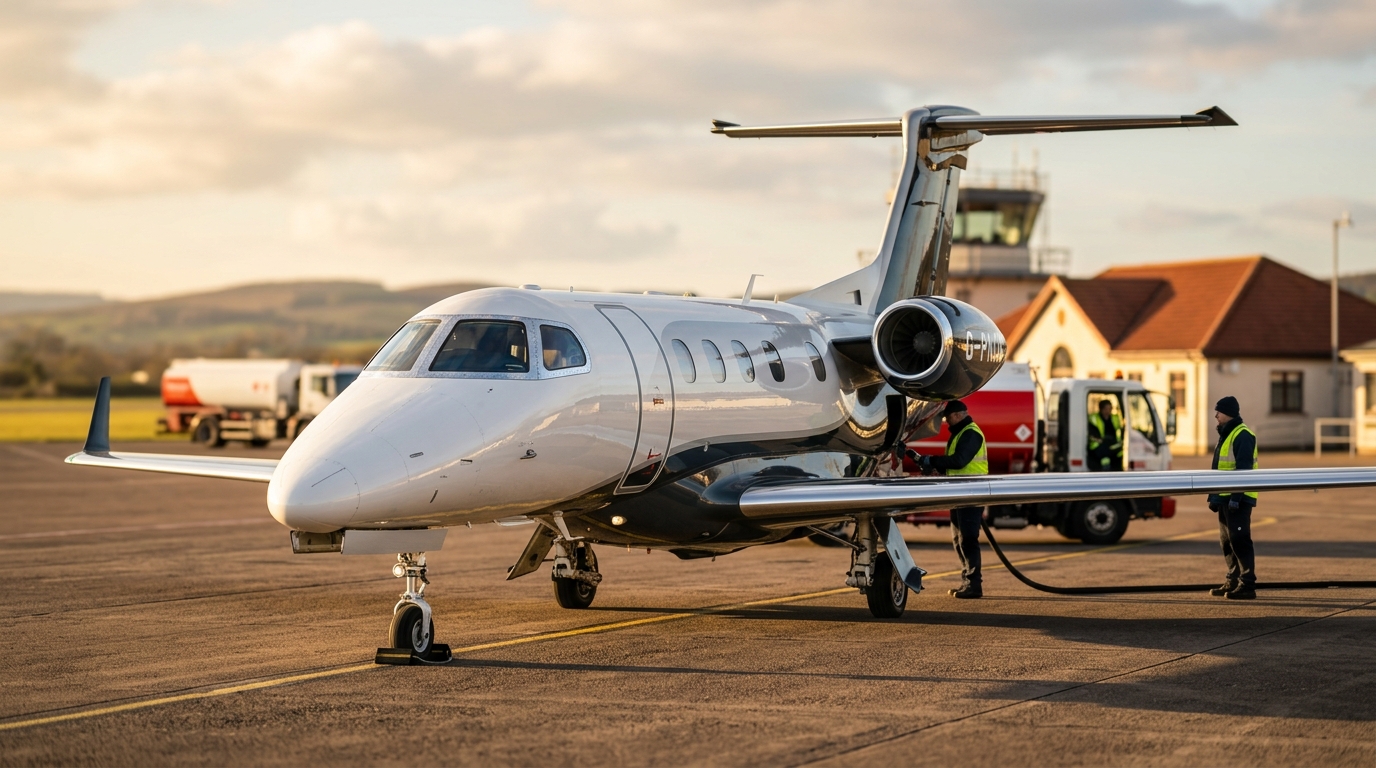
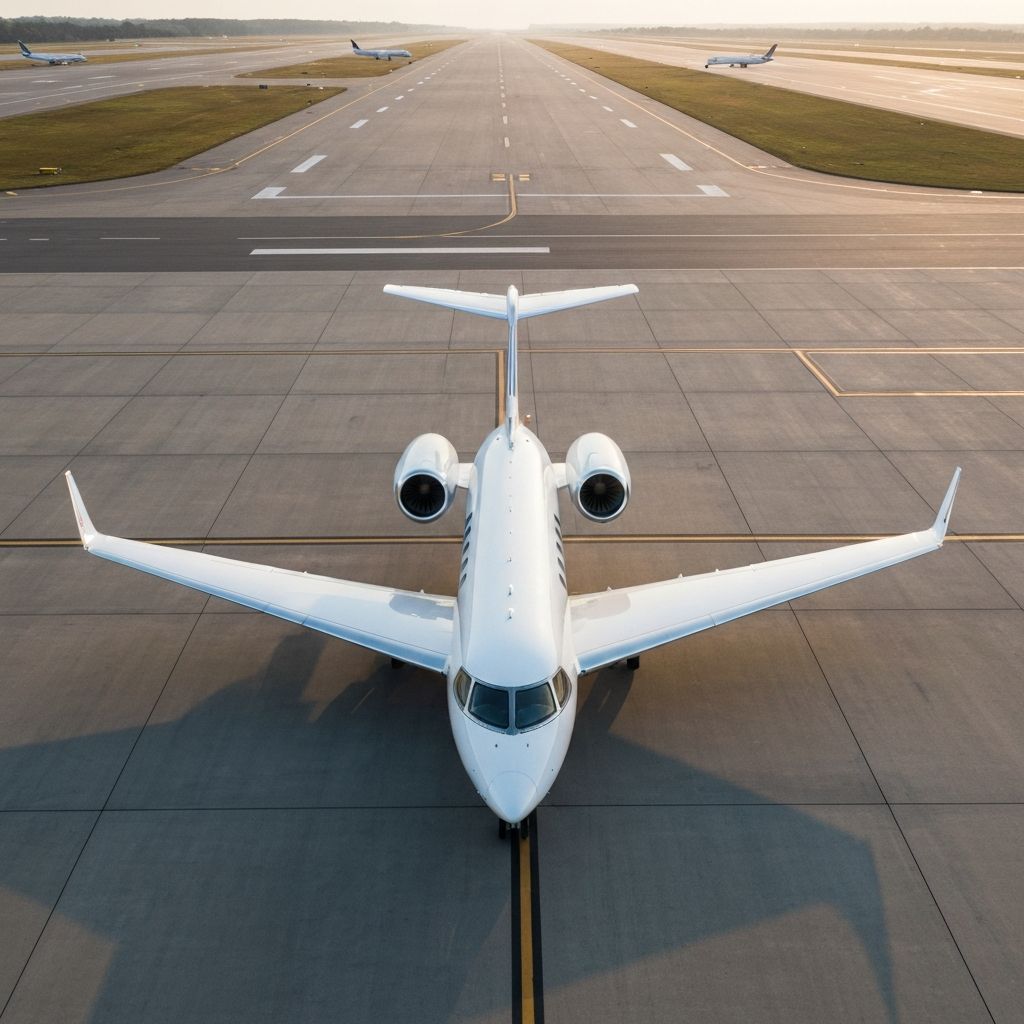
Cabin choice matters more when several people and animals are travelling together. An Embraer Phenom 300E has a manufacturer-stated cabin width of 5 ft 1 in and height of 4 ft 11 in; a Cessna Citation Longitude measures 6 ft 5 in wide and 6 ft high. Those figures help frame a practical discussion about carriers, passengers and floor space, although the aircraft’s approved cabin layout determines what can actually be accommodated.
For a representative London–Nice one-way charter, allow roughly £10,000–£16,000 for a light jet such as the Phenom 300E, subject to aircraft positioning, dates, airport charges and availability. Travelling with a pet may add cleaning charges or affect which operators will quote. Ask for those costs and conditions in writing, rather than assuming the pet is included in the headline price.
What to tell your broker before requesting a quote
An operator cannot give a useful answer to ‘Can my dog come?’ without knowing the dog’s size and the intended routing. Send your broker the species, breed, number of animals, individual weights and carrier dimensions, alongside the passenger count and luggage details. Mention any animal that needs substantial floor space or is likely to struggle with stairs.
Disclose the breed even if you believe the pet will be accepted. Operators may impose their own restrictions, while some countries apply separate rules to certain breeds or require additional permissions. A cat travelling in a rigid carrier and two large dogs travelling loose present very different cabin and handling questions.
Set out every stop, not just the final destination. A fuel stop, an overnight stay or a change of aircraft can introduce another country’s animal-entry or transit requirements. If you want flexibility to move the return date, say so before booking: an animal-health certificate or timed parasite treatment may make an apparently simple schedule change impractical.
Ask which aircraft operator will perform each leg, whether pets are accepted on that specific aircraft and whether the proposed departure and arrival airports can handle the journey. Flying with pets on a private jet is easiest to arrange when the route, paperwork and cabin policy are checked together, before money is committed to an aircraft.
Your broker also needs to know whether this is ordinary pet travel or a commercial movement, such as a sale or transfer of ownership. The rules can differ. Great Britain’s standard pet-travel provisions generally cover up to five pets per person, with a limited exception for qualifying competitions, shows or sporting events; travelling privately does not change the purpose of the movement.
Documents and entry requirements for your destination
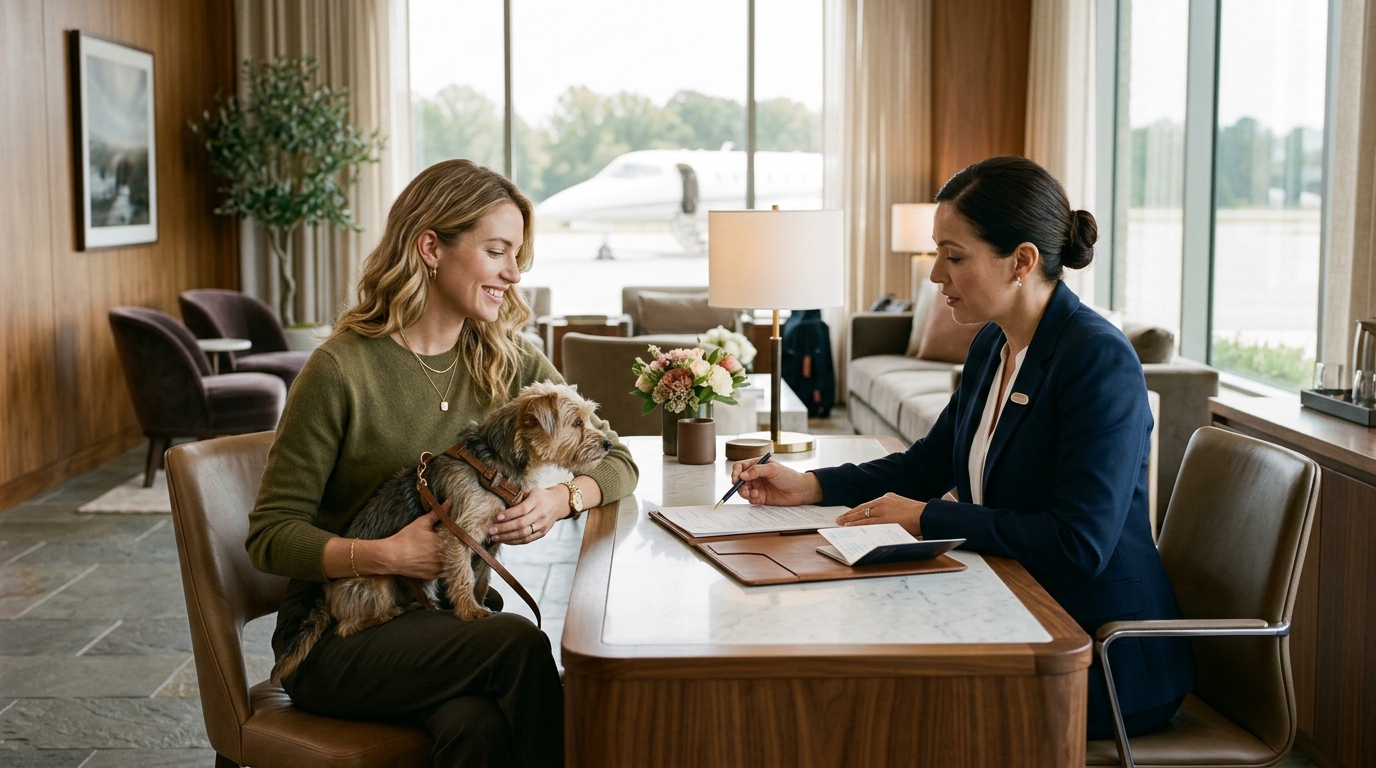
A private terminal cannot waive a destination country’s import conditions. For a dog, cat or ferret travelling from Great Britain to the EU under ordinary pet-travel rules, the essentials normally include a microchip, a valid rabies vaccination and the appropriate travel document. The microchip must be implanted before, or at the same time as, the rabies vaccination; after a primary vaccination, the usual wait before EU entry is at least 21 days.
Most UK-based owners making an EU trip will need an animal health certificate issued by an official veterinarian. It must generally be issued no more than 10 days before entry into the EU and can then cover onward travel within the EU, and return to Great Britain, for up to four months, provided the relevant requirements remain satisfied. A pet passport issued in Great Britain is not valid for entry to the EU; a valid passport issued by an EU country or certain other accepted countries may be usable.
Tell your vet the precise destination and travel dates before arranging the appointment. Finland, Ireland, Malta and Norway require tapeworm treatment for dogs before arrival under their pet-travel rules, with timing that must be recorded correctly. Other destinations may demand import permits, blood tests, quarantine arrangements or certificates with different validity periods. Check the relevant authority’s current instructions rather than relying on paperwork from an earlier holiday.
A journey beyond Europe deserves more lead time. Some countries require rabies antibody testing and a subsequent waiting period measured in months, making a spontaneous departure impossible even when an aircraft is available tomorrow. The UK’s rules for bringing the animal home can also depend on the country from which it returns.
Build document checks into the booking timetable. Send readable copies to the broker and operator early, but carry the originals where required. The crew can help coordinate the flight; it cannot correct a missing microchip record, obtain a veterinary certificate on departure day or persuade border officials to overlook an expired vaccination.
Returning to Great Britain: approved routes and pre-flight checks
A pet-friendly operator and an available landing slot at EGLF Farnborough do not, by themselves, establish that your animal may enter Great Britain there on your proposed flight. Pet dogs, cats and ferrets generally must arrive using an approved carrier and route, unless an exception applies. Private-aircraft arrangements need particular scrutiny: confirm the current approved route, the operator’s status and the airport’s procedures with your broker and the relevant authorities before you book the return sector.
Do not treat a familiar private aviation airport as automatic approval for pet entry. If the planned arrival cannot satisfy the requirements, the solution may involve a different approved airport or a different travel arrangement for the animal. That decision belongs at the beginning of the itinerary, not in a telephone call from the departure lounge in France.
Before departure for Great Britain, check that the animal has a working microchip, valid rabies vaccination and an accepted document for its journey. Depending on where it has travelled, that may be an animal health certificate used for the outbound EU trip, an accepted pet passport or a Great Britain pet health certificate. The documentation must match the animal and the route actually taken.
Dogs usually need tapeworm treatment administered by a vet no less than 24 hours and no more than 120 hours before entering Great Britain. The vet must record it correctly in the travel document. The treatment is generally not required when arriving directly from Finland, Ireland, Malta or Norway, but confirm the rule for your precise itinerary before relying on that exemption.
Timing deserves attention on a short break. If your dog receives treatment on Monday morning for a Friday evening arrival, you are close to the 120-hour limit; a delayed departure could push the journey outside it. Arrange the appointment against the expected time of entry, retain enough margin for disruption and ask the operator how a delay would affect the flight.
There are separate arrangements for travel from Ireland and for recognised assistance dogs. Neither is a reason to guess which rules apply to a privately chartered aircraft. The safest instruction to your broker is explicit: confirm that this animal, on this flight, can be checked and admitted at the proposed Great Britain arrival point.
Preparing your pet for a comfortable flight
Comfort starts before the aircraft door closes. Let your pet become familiar with its carrier or harness at home, particularly if the operator requires it during ground movements. Bring an absorbent liner, waste bags, a familiar blanket and a small supply of its usual food; changes of diet are a poor experiment on a travel day.
Discuss feeding, medication and any history of travel anxiety with your vet. Do not sedate an animal merely to make the flight quieter without veterinary advice: drugs can affect breathing and balance, and an operator may have its own policy on sedated pets. Keep medication and dosage instructions in the cabin rather than in inaccessible luggage.
Plan a walk and an opportunity to toilet before reaching the aircraft. At the private terminal, keep the animal restrained even if the building feels quiet. Airside vehicles, unfamiliar noises and open doors are ample reasons not to assume a well-trained dog will stay beside you.
Tell the crew how your pet usually settles and follow their instructions about seating and restraint. On a longer sector, ask in advance whether there is room for a water bowl that can be secured and where a carrier can remain without obstructing an exit. The aim is a calm cabin that remains safe for everyone aboard.
Finally, give the animal the same administrative attention as the human passengers. Its name may not appear on a conventional passenger manifest in the same way, but its presence, documents and entry arrangements must be known to everyone responsible for the flight. That preparation is what turns private flying with a pet from an attractive idea into a journey that can actually be completed.