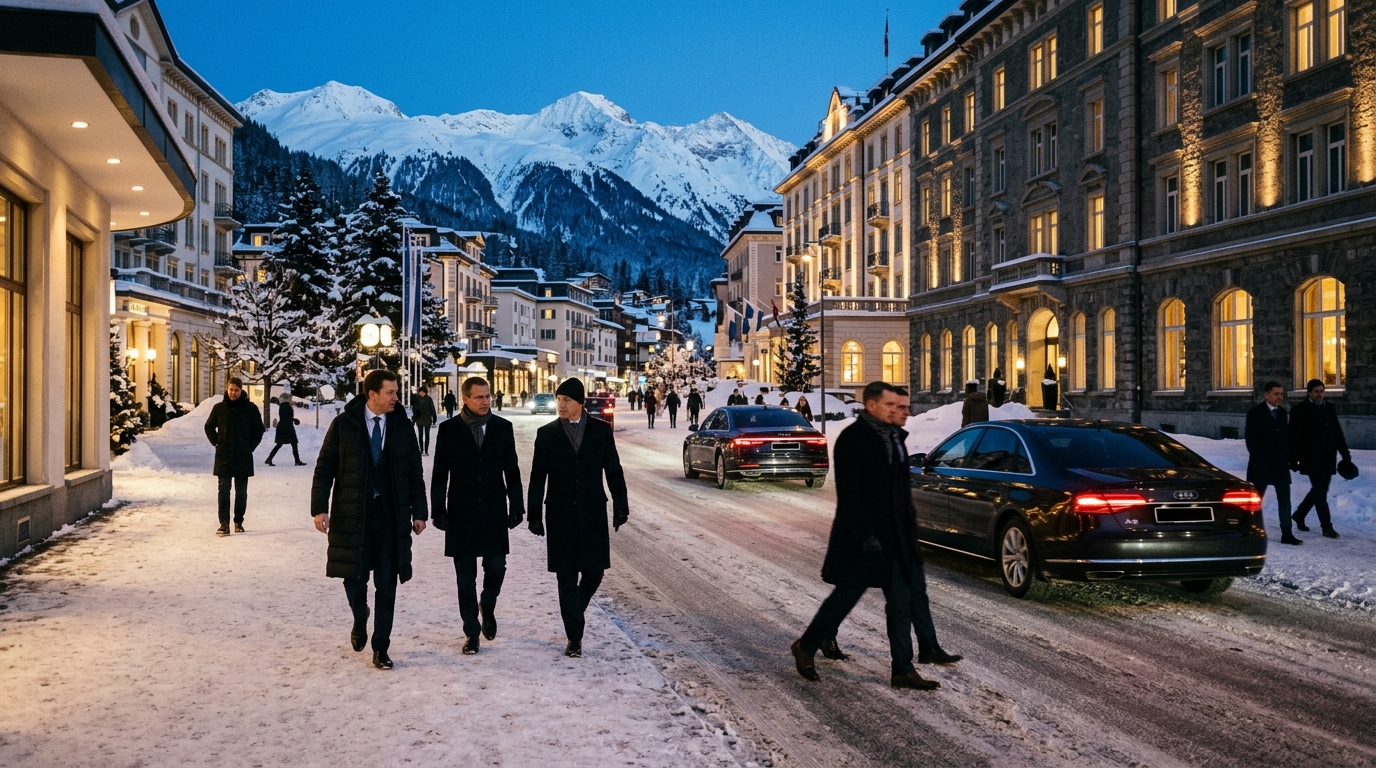
Why Davos Is One of the Hardest Private Jet Destinations in Europe
Zurich (LSZH) sits about 150 km from the Congress Centre, roughly two hours by road in dry conditions, and that gap shapes every decision about a private jet to Davos. The town has no airfield of its own, so every principal arriving by air lands elsewhere and finishes the journey by road, rail or helicopter.
The World Economic Forum traditionally runs in the third week of January, and the 2027 dates should be checked against the organisers' announcement before anything is held. For about five days, hundreds of business aircraft movements compete for limited apron space at a handful of Swiss airfields. Arrivals cluster around the opening days and departures around the close, so the same 48-hour windows are contested by every delegation.
Swiss authorities also restrict the airspace around Davos during the meeting, and the Air Force polices it. A late change of destination becomes a request to be approved rather than a decision the crew can make.
Add January itself: low cloud in the Alpine valleys, snow showers and icing. An aircraft that arrives without a de-icing slot can wait two or three hours on the ground in Forum week, and that delay lands on top of an already tight arrival window.
This is why the route matters more than the aircraft. A Challenger 350 with no confirmed parking is worth less than a Phenom 300E with a slot, a handler and a helicopter waiting behind it.
Zurich, Samedan, Altenrhein or St. Gallen: Choosing the Right Airport for Davos
The usual shortlist has four names but only three airfields, because St. Gallen-Altenrhein (LSZR) is a single airport on Lake Constance. The real choice is between three, and it is a trade of road time against runway restrictions.
Zurich (LSZH) is the default for anything larger than a light jet. Its longest runway is 3,700 m, customs is routine, and it accepts everything from a Phenom 300E to a Bombardier Global 7500. The cost is the road: about two hours to Davos in dry weather, and noticeably longer when snow slows the Prättigau valley road through Klosters. A helicopter transfer of roughly 40 minutes removes the road but adds its own permissions and weather dependency.
Samedan (LSZS), the Engadin airport, is the closest field to the Forum, about 20 minutes by helicopter. It sits at 1,707 m (5,600 ft) with an 1,800 m runway, and it expects daylight arrivals, prior permission and crews with experience of the approach. Road links depend on mountain passes that can close in winter, so the helicopter is the plan and the road is the fallback.
Altenrhein (LSZR) has a runway of about 1,460 m and suits light jets such as the Phenom 300E and the Pilatus PC-24. The drive to Davos is around 1 hour 45 minutes. It works best as a release valve when Zurich's apron is full, not as a first choice.
A workable rule: a party of up to eight, with a Samedan-capable aircraft and a helicopter already booked, should aim for Samedan. Nine passengers or more, or any aircraft heavier than a midsize jet, belongs at Zurich.
Slots, Parking and Prior Permission: What to Lock In Before January
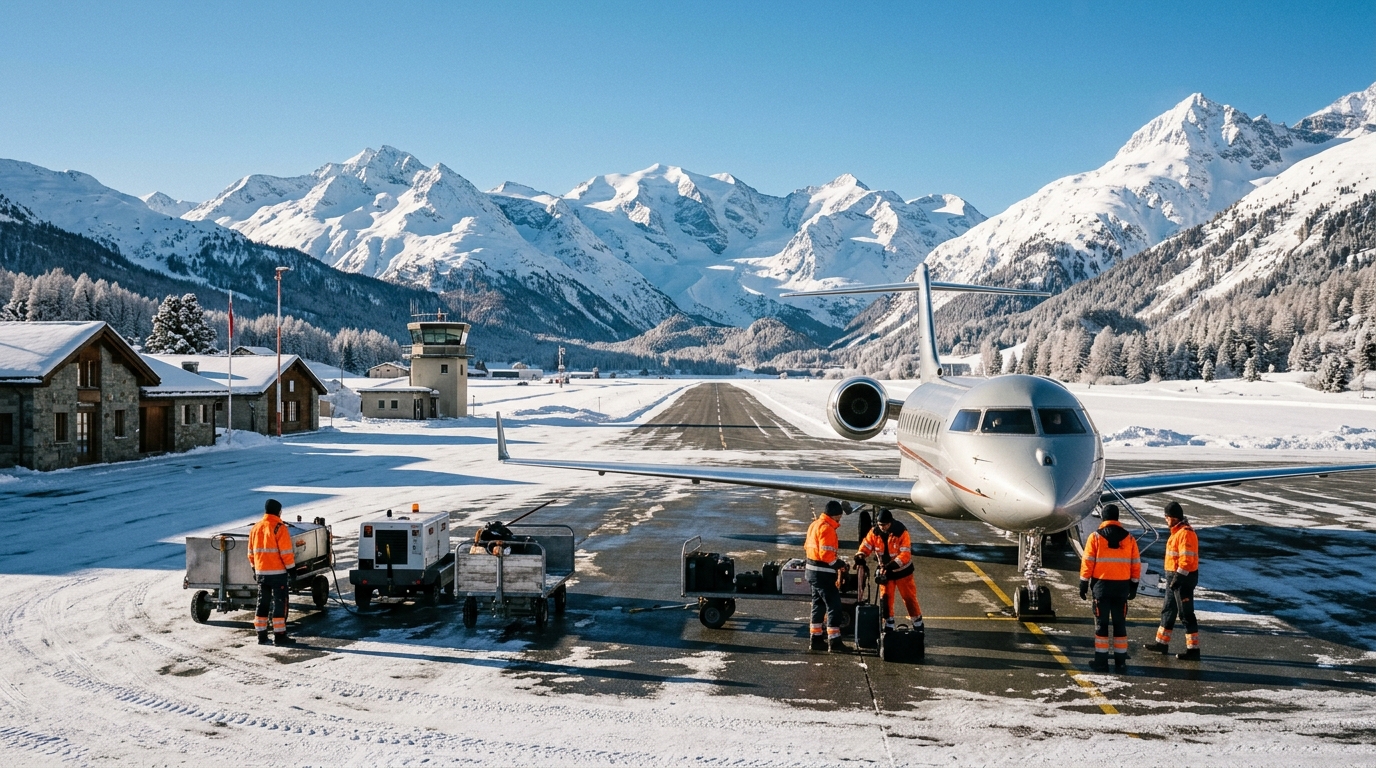
Zurich is a slot-coordinated airport, and during Forum week the business aviation apron fills well before the first delegate lands. Anyone flying private into the Forum should expect Samedan and Altenrhein to work on prior permission, which is granted against limited parking rather than a slot, so those smaller fields can be full sooner than expected.
A broker should lock in five items early, in writing:
- Arrival and departure slots or permissions, with alternates agreed for the day either side.
- Parking duration. Many aircraft cannot stay on the ground for the full meeting, so a drop-and-go plan, where the jet leaves empty and returns for the departure, must be agreed with the handler.
- De-icing capacity, confirmed at the airfield rather than assumed.
- Handling, customs and immigration, including any special arrangements for delegations.
- Crew hours. A delayed departure on a snowy Friday can push a crew past duty limits, and a replacement crew cannot be found at short notice.
Price is where lead time shows. A London Farnborough (EGLF) to Zurich charter on a Phenom 300E runs £8,000 to £11,000 one-way in an ordinary January week, and £10,000 to £15,000 in Forum week. A Challenger 350 on the same sector runs £13,000 to £19,000 in Forum week, depending on positioning and lead time. Samedan typically adds 15 to 25 per cent for positioning and airfield charges.
Flight time from the London area is about 1 hour 30 minutes to Zurich and 1 hour 45 minutes to Samedan.
When Zurich cannot offer overnight parking, the usual answer is a short positioning flight of around 20 minutes to Basel-Mulhouse (LFSB), with the aircraft returning on the morning of departure. That plan only works if the return slot is confirmed before the aircraft leaves, otherwise the jet has nowhere to collect its passengers.
Aircraft Choice for Alpine Winter Operations: Which Jets Suit Which Airfield
Runway length, altitude and cabin size pull in different directions, and the right jet depends on which airfield the broker has secured.
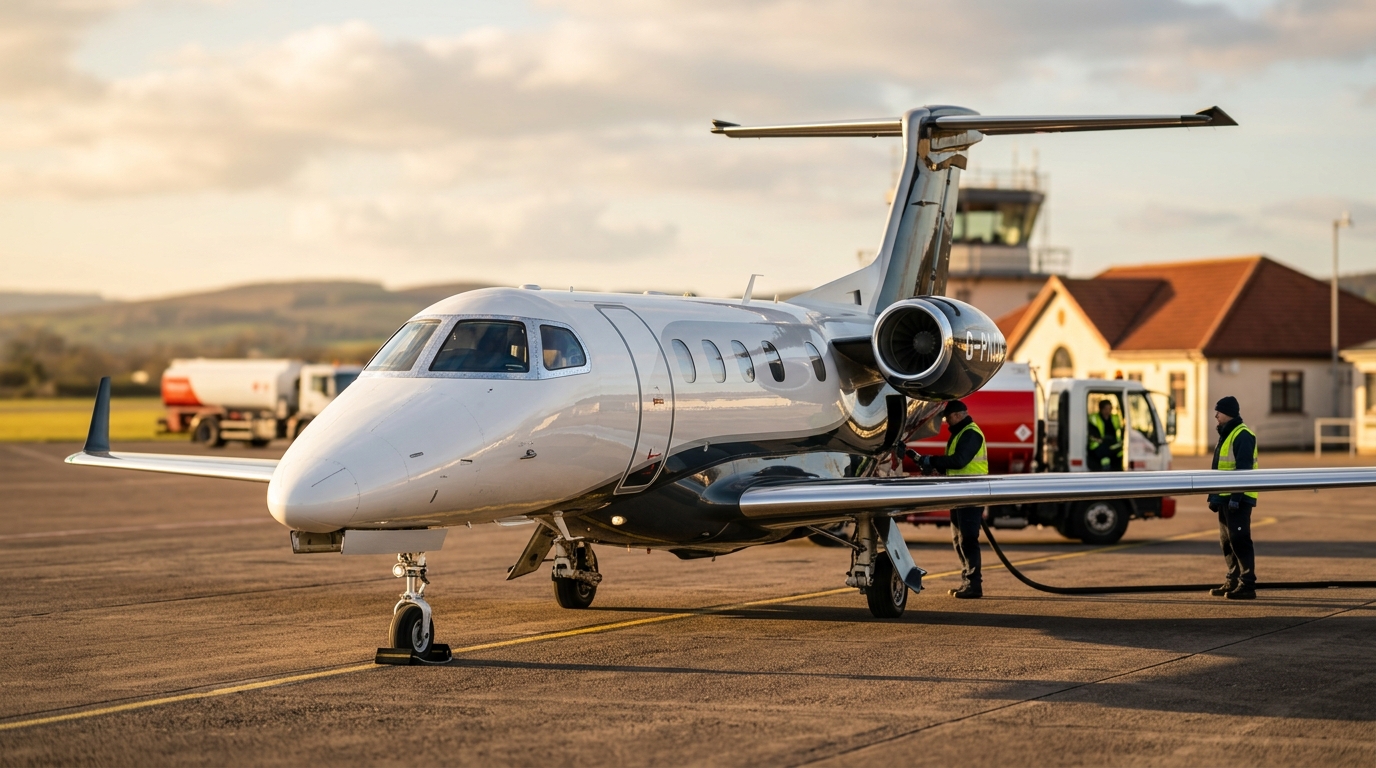
For Samedan, the Pilatus PC-24 is the natural fit. Its cabin is 5 ft 6 in wide and 5 ft 1 in high, it seats up to eight, and it was designed for short and demanding runways. The Embraer Phenom 300E is the other realistic option, with a cabin 5 ft 1 in wide and 4 ft 11 in high and a range of 2,010 nm. Both carry six passengers with luggage comfortably; skis and equipment reduce that number quickly.
A larger midsize jet such as the Challenger 350, with a cabin 7 ft 2 in wide and 6 ft high, seats up to ten. The Citation Latitude, at 6 ft 5 in wide, is a direct comparator. Whether either can use Samedan depends on operator performance calculations for the day's weight and temperature, so ask for the figures rather than accepting a general assurance.
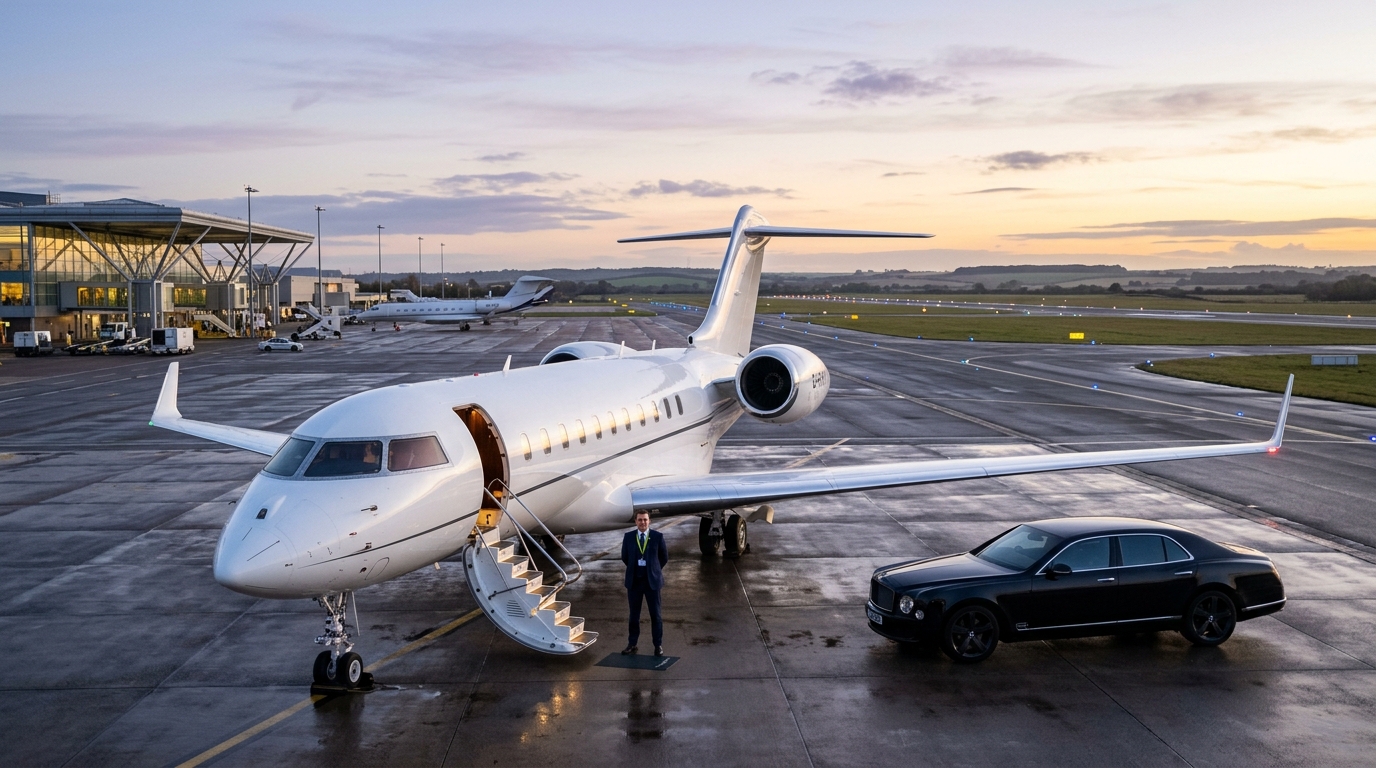
At Zurich, the field accepts the largest cabins. The Bombardier Global 7500 (8 ft 6 in wide, 6 ft 2 in high) and the Gulfstream G650ER (8 ft 2 in wide, 6 ft 2 in high) both suit principals who want the aircraft to work as an office on a two-hour Forum-week turnaround. Neither should be chartered for a Samedan or Altenrhein arrival.
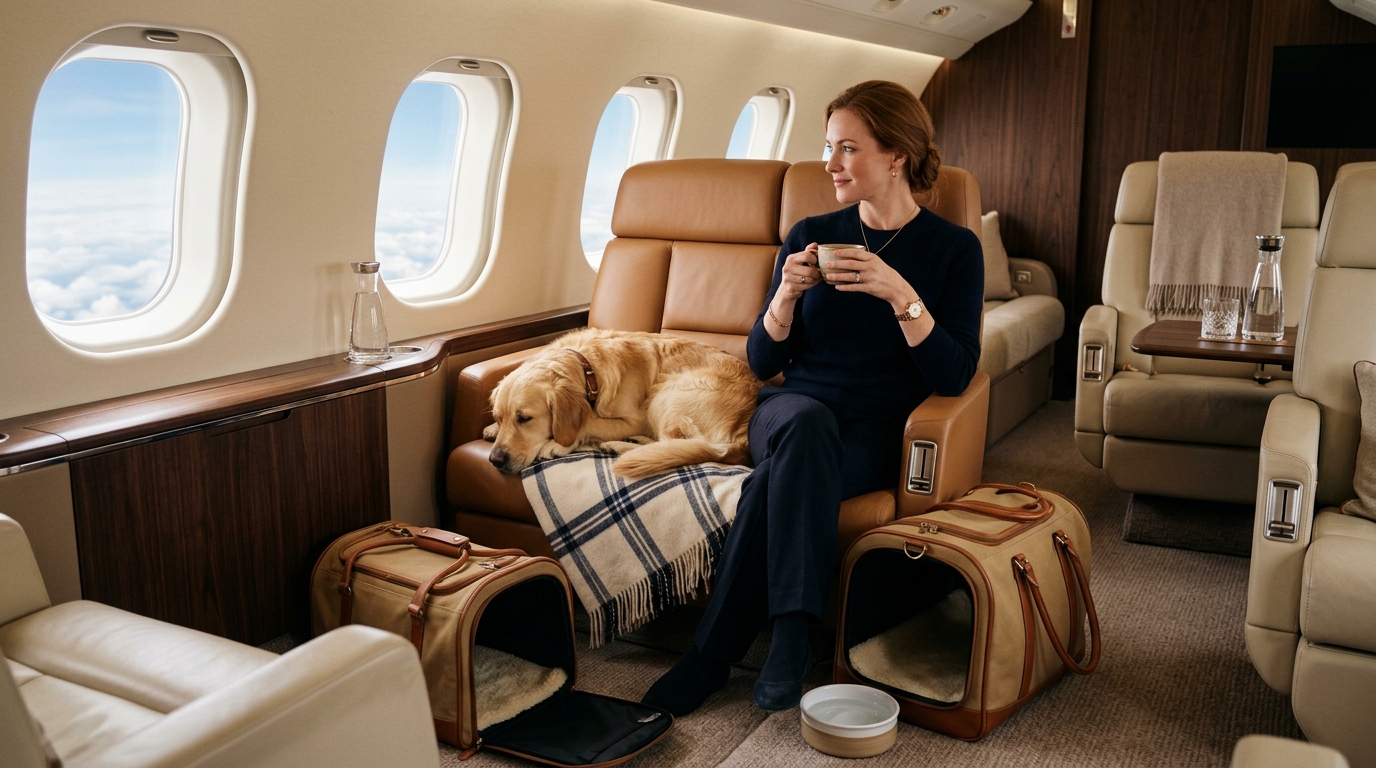
Luggage deserves a line of its own. A team of six with winter clothing, laptops and security equipment overfills the hold of a light jet, and the fix is a second aircraft or a larger cabin, not a lighter suitcase.
From Runway to Congress Centre: Ground Transfers, Helicopters and Security
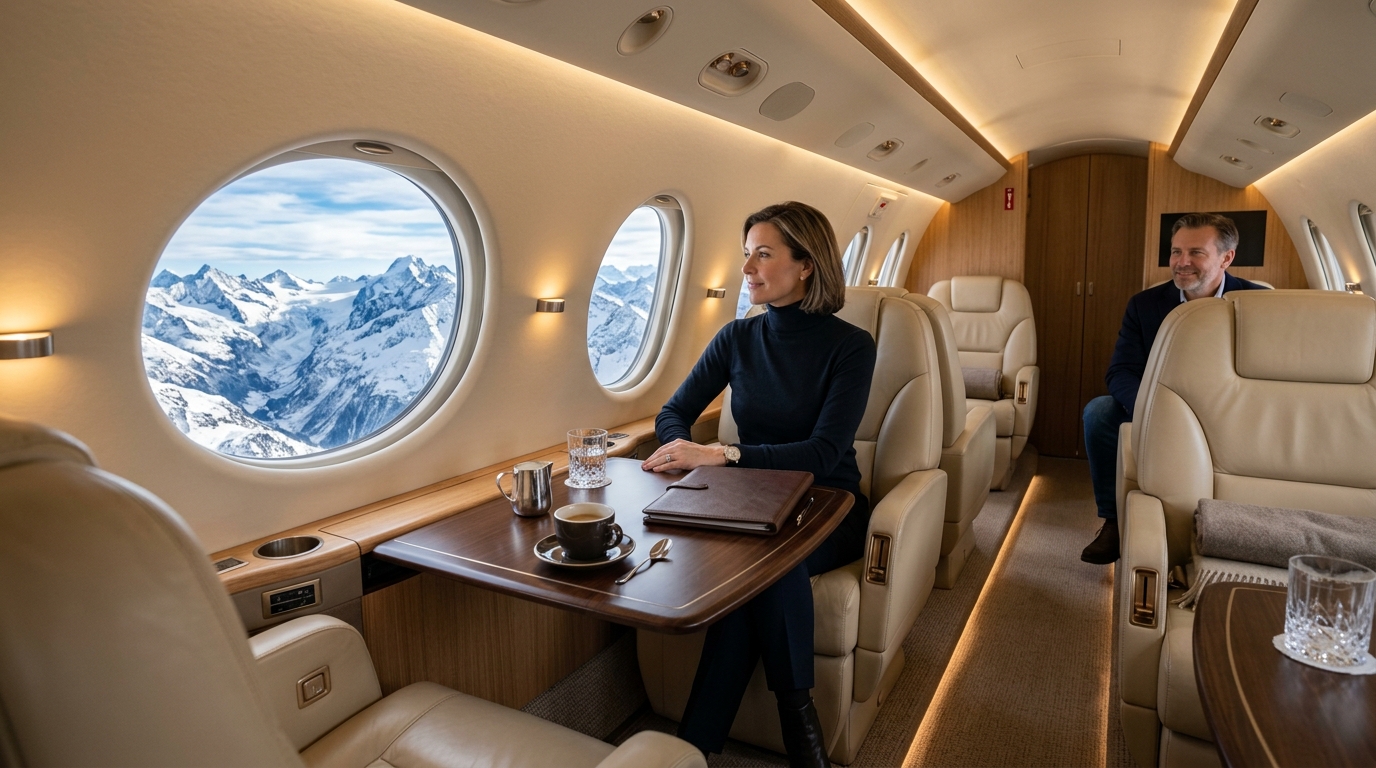
Getting from the apron to the door is where a well-planned Forum trip most often fails. A vehicle waiting at Zurich needs to be accredited for Davos access, and the organisers and the Graubünden cantonal police set which cars may approach the Congress Centre and where they may stop.
Helicopters ease the road but do not remove the risk. Slots for landing near Davos are controlled, and low cloud or icing can ground the fleet on the day. A principal on a tight programme should have a road transfer on standby, with a driver holding valid accreditation, even when a helicopter is confirmed.
Journey times deserve a buffer. The two-hour drive from Zurich can stretch to three hours in snow, and a road closure can double it. Building a 90-minute cushion into any meeting the same day is prudent.
Security starts on the ground. Close protection teams travelling with personal weapons need Swiss permits arranged well ahead of arrival. Manifests, aircraft registrations and vehicle details are typically shared with the handler and authorities in advance, and any late change can delay clearance.
Confidentiality matters too. A broker should share passenger names only with the parties who need them, and confirm that handlers and drivers are briefed on discretion before arrival.
Winter Weather, Contingency Planning and When to Book
Zurich is the safest alternate for any Alpine arrival, and every plan should name it in writing. If Samedan is closed by weather, the aircraft diverts or holds at Zurich, and a road or helicopter transfer picks up from there. Without that agreed fallback, a diversion can leave passengers stranded in a valley with no ground transport.
Contingency planning comes down to three decisions made in advance. Agree the weather thresholds at which the crew will divert, and who decides. Keep a road vehicle booked in parallel with any helicopter. And hold a second aircraft option for the return, since a snowbound departure day is when replacement capacity disappears.
On timing: parking, permissions and de-icing capacity are usually claimed by early autumn for a January event. Realistically, a party wanting Samedan or a large-cabin jet at Zurich should be confirming by the end of October. Bookings made in December can still succeed at Zurich on a light or midsize jet, but expect the higher end of the price range and fewer alternates.
A broker who has done Davos before will already hold relationships with the handlers, helicopter operators and drivers who matter. Those relationships, more than any aircraft on the fleet list, decide whether the trip runs to plan. For anyone chartering to the Forum, commit to the airfield and the ground plan first, then choose the aircraft to match.