 Farnborough
 Nice
Nice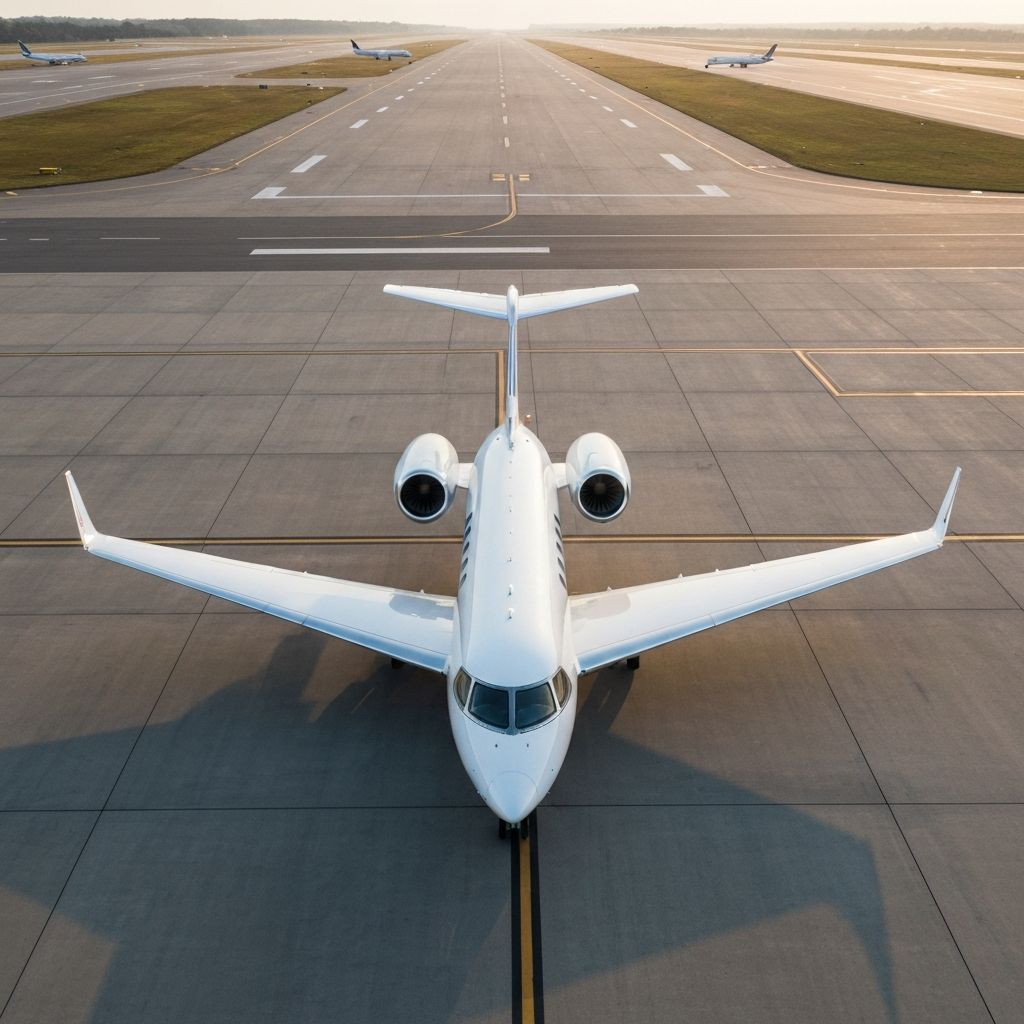
The Trijet Difference: Why Three Engines Still Matter in 2026
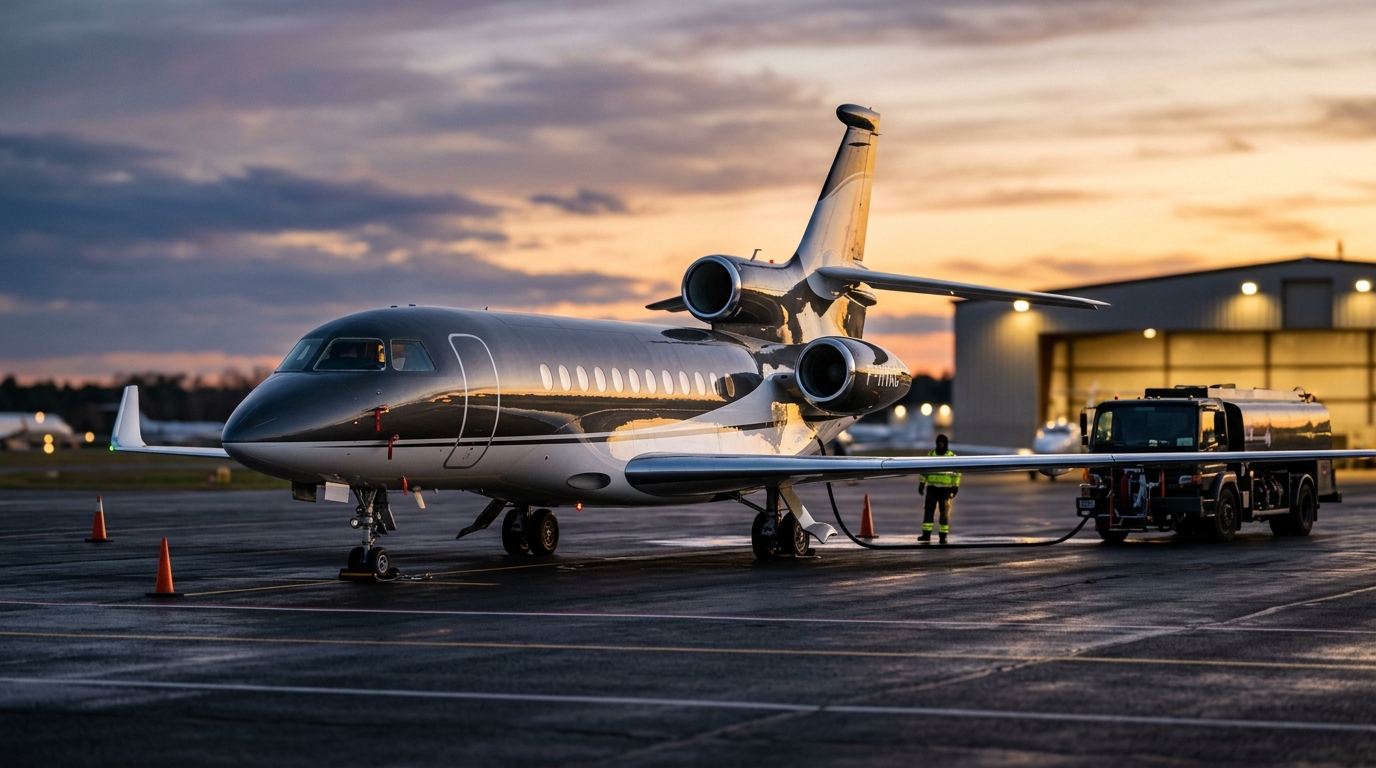
Three Pratt & Whitney Canada PW307D engines, not two, are the reason a Dassault Falcon 8X can be certified for a 5.5-degree steep approach into London City Airport (EGLC) while twin-engine ultra-long-range jets such as the Gulfstream G650ER and Bombardier Global 7500 cannot. That single design choice, inherited from the trijet lineage running back through the Falcon 900 and 7X, is exactly what a Dassault Falcon 8X charter buys access to: airports, not just distance.
Trijets fell out of favour in commercial aviation decades ago, overtaken by twin-engine economics on scheduled routes. Business aviation followed a different logic. Dassault kept building trijets because the configuration delivers genuine engine-out performance margin at high elevation, on short runways and on steep glideslopes, precisely the conditions where a heavy long-range jet is most exposed if it loses a motor on approach.
Each PW307D produces 6,722 lb of thrust, giving the 8X a combined output that lets it maintain climb gradient and go-around performance with one engine inoperative in scenarios that would keep a twin-engine jet from operating the same procedure. That certification margin is not marketing language; it is what the UK CAA and Swiss FOCA require before signing off on steep-approach and short-runway operations at specific airports.
The trade-off is fuel burn per hour, which runs higher than a comparable twin such as the G650ER on a like-for-like sector. Clients who book a Falcon 8X charter generally accept that cost because the aircraft opens airports the range-equivalent twins simply cannot file into.
There is a crew and dispatch dimension to the three-engine layout too. Pilots hold a single type rating covering the 7X and 8X, and operators report dispatch reliability above 99 percent across the current in-service fleet, a figure Dassault attributes partly to the redundancy the third engine provides for auxiliary power and hydraulic backup during ground operations at airports with limited maintenance support.
Steep-Approach Access: London City, Lugano, and the Airports Long-Range Twins Can't Reach
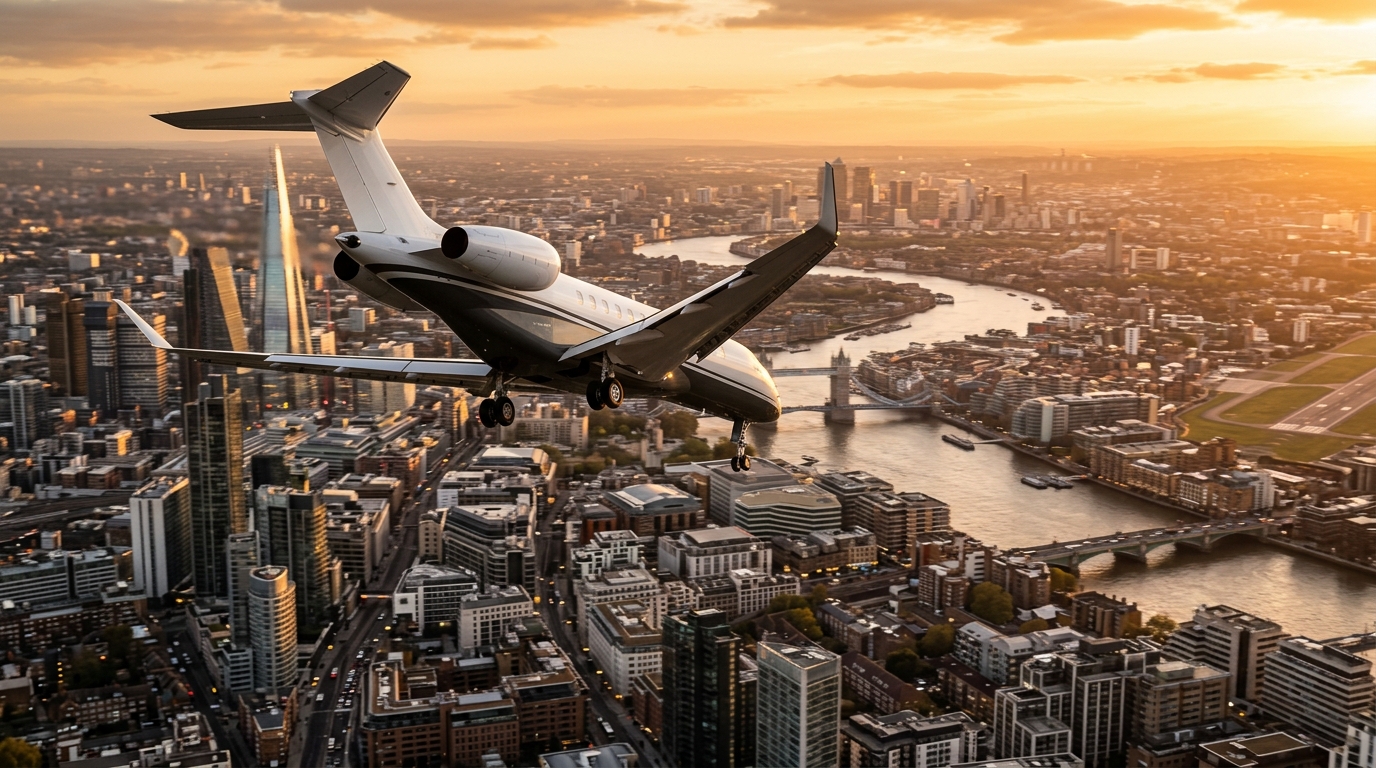
EGLC's approach sits inside a 5.5-degree glideslope corridor built for STOL-type traffic, a profile no Gulfstream G650, G700 or Bombardier Global 7500 holds certification for. The Falcon 8X does, and it remains the only aircraft in the ultra-long-range category that combines that steep-approach clearance with genuine transatlantic range.
Lugano Airport (LSZA) presents a similar case: high terrain on both sides of the approach, a displaced threshold and a runway short enough that most heavy-cabin jets are excluded outright. The 8X's trijet thrust margin and 5,910 ft balanced field length let it operate there routinely, where operators flying a Global 7500 or G650 must instead reposition passengers by helicopter or car from Milan Malpensa (LIMC) or Zurich (LSZH), adding 60 to 90 minutes to the journey.
London City is the more commercially significant of the two. A Dassault Falcon 8X charter into EGLC lands a City-based client eight to twelve minutes from Canary Wharf or the Square Mile by car, avoiding the additional 40 to 60 minute transfer from Farnborough (EGLF) or Luton (EGGW) that a G650ER or Global 7500 charter requires because neither aircraft is cleared for the airport's approach.
That access advantage does not apply everywhere. Runway length and glideslope requirements at most major hubs, Nice (LFMN), Geneva (LSGG), Zurich, sit well within twin-engine limits, so the 8X's steep-approach certification only pays off on the specific route pairs where London City or Lugano is the origin or destination airport.
Cabin and Range: What 6,450 Nautical Miles Actually Buys You
London to Los Angeles, Hong Kong to Paris, and Johannesburg to New York all sit inside the Falcon 8X's non-stop range envelope, a genuine step up from the 6,000 nm Falcon 7X it replaced. That 6,450 nm figure, flown at Mach 0.80 with eight passengers and four crew, puts the 8X in direct range parity with the Gulfstream G650ER, even though the two aircraft compete on very different terms once airport access enters the calculation.
The cabin measures 6 ft 2 in high and 7 ft 8 in wide, with 42.7 ft of usable length, the longest cabin cross-section available in this class of aircraft. Dassault configures it in three living zones as standard: a forward seating area, a mid-cabin lounge or conference grouping, and an aft stateroom with a divan that converts to a berth, useful on the 13 to 14 hour sectors the aircraft's range makes possible.
Cabin altitude is the detail most clients notice on long sectors, rather than the brochure figures. The 8X holds a 3,050 ft cabin altitude at FL410 cruise, roughly matching the Global 7500's pressurisation and beating most Falcon and Challenger models a generation older, which measurably reduces fatigue over flights of ten hours or more.
Baggage capacity is 140 cubic feet, accessible in flight through an internal door, enough for the ski equipment, golf bags or extended-stay luggage that families and business groups tend to bring on the longer sectors this aircraft is typically chartered for.
The flight deck matters here as much as the cabin. Dassault's EASy III avionics suite, paired with the FalconEye combined-vision system, overlays synthetic and infrared imagery on the head-up display, giving crews the terrain and runway picture required to fly a 5.5-degree approach into a constrained airport like Lugano in low visibility. That is the technology underpinning the steep-approach certification described earlier, not the engines alone.
Falcon 8X vs Gulfstream G650 vs Global 7500: Where It Actually Fits
Range puts all three aircraft within a few hundred nautical miles of each other: the G650ER flies 7,500 nm, the Global 7500 reaches 7,700 nm, and the Falcon 8X covers 6,450 nm, a gap that matters only on the handful of true ultra-long routes, such as Hong Kong to New York, where the Dassault would need a technical stop the other two can skip.
Cabin volume tells a different story. The Global 7500 offers 2,619 cubic feet across four living zones, the largest cabin in the category, while the G650ER's 6 ft 5 in cross-section is roomier than the 8X's but runs a shorter 44.5 ft cabin length. The Falcon 8X sits between the two on raw volume but wins on runway access, a trait neither the Gulfstream nor the Bombardier can certify against.
Price reflects that positioning. A new Falcon 8X lists at roughly $59 million against the Global 7500's $75 million and the G650ER's $70 million, and the charter market broadly mirrors that spread: a Dassault Falcon 8X charter typically runs 8 to 12 percent cheaper per flight hour than a Global 7500 on the same route once positioning and handling fees are included.
For a representative London departure, a one-way Falcon 8X charter from Farnborough or London City to New York Teterboro (KTEB) currently prices between £115,000 and £145,000 depending on season and operator, against £130,000 to £165,000 for the same sector on a Global 7500.
Maintenance economics follow a similar pattern to the purchase price. Three engines mean three overhaul cycles rather than two, which pushes direct maintenance cost per flight hour above the G650ER's figures according to operator cost data, though owners who fly regularly into restricted airports generally treat that premium as the price of the routes it unlocks rather than a straightforward inefficiency.
The practical choice comes down to the origin airport. A client whose journey starts or ends at London City or Lugano gains nothing from the Global 7500's larger cabin if that aircraft cannot land there; a client flying Geneva to Singapore non-stop gains nothing from the 8X's steep-approach certification, because neither airport requires it.
Who Should Charter the Falcon 8X
The decision threshold is straightforward: if either end of the itinerary is London City, Lugano, or another steep-approach or short-field airport under 5,000 ft, and the sector exceeds 3,000 nm, the Falcon 8X is the only aircraft in the ultra-long-range category that clears both constraints at once.
Family offices and City-based principals who fly into EGLC regularly are the clearest fit, since every trip saves the drive out to Farnborough or Luton that a G650ER or Global 7500 itinerary would otherwise require. Groups of six to eight travelling on sectors of ten hours or more also suit the aircraft's three-zone cabin, which gives a working area separate from a rest area without needing the Global 7500's larger footprint.
Clients whose routing never touches a steep-approach airport, and who need the outright longest non-stop range, Perth to London, for instance, are better served by the Global 7500 or the G650ER. The 8X's advantage is access, not maximum range, and the two should not be confused when comparing quotes.
Mission profile matters as much as headline range when weighing the aircraft against its two closest rivals. A principal who commutes weekly between a Mayfair office and a Geneva residence gains a tangible, repeated benefit from EGLC access that a once-a-year Perth sector never delivers, which is why the 8X tends to suit recurring City-to-Europe patterns better than one-off maximum-distance itineraries.
Booking a Dassault Falcon 8X charter through a broker rather than direct to an operator matters here specifically because slot access at London City and Lugano is limited and seasonal. An experienced broker holds relationships with the handful of operators certified for both approaches and can secure a slot inside the narrow window most charter desks cannot.