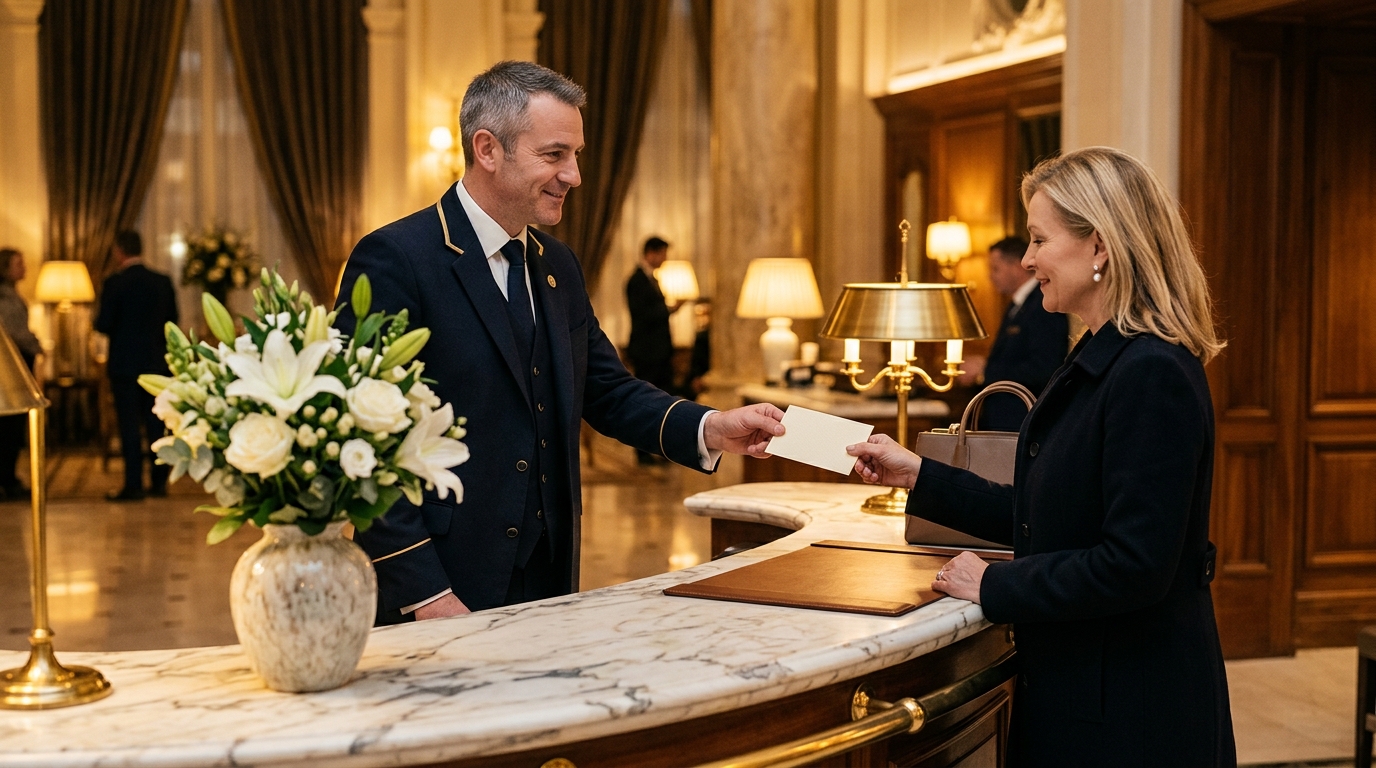
Why the Headline Charter Quote Is Not Your Commission Base
A £12,000 charter from Farnborough to Nice can earn a hotel concierge £180, yet a concierge who assumes a flat 10% of the quote expects £1,200.
If you have ever searched for charter broker commissions explained in plain terms and found only percentages, the missing piece is the base those percentages apply to. The headline figure a guest sees, often £30,000 to £60,000 for a large-cabin jet on a long sector, is mostly money that passes through the broker to other parties.
The operator who owns and flies the aircraft takes the largest share. Fuel suppliers, airports, handling agents and tax authorities take most of the rest. None of that is available to share with an introducer.
A referral share is normally measured against the broker's own fee: the amount retained for sourcing the aircraft, vetting the operator, managing the trip and standing behind it if something goes wrong. That is a far smaller number than the quote, and your commission is a percentage of it.
Every example below uses one illustrative arrangement: 20% of the broker's fee on the first booked trip. Rates vary between brokers, and these are worked examples for estimating, not a rate card. The mechanic holds whatever the percentage.
Getting it wrong has a practical cost. A concierge who tells a colleague to expect "10% of £50,000" and then receives £900 has a credibility problem with the colleague and with the broker.
The distinction also protects the relationship. A broker can only share its fee on trips that operate, so a quote that never flies, or a guest who compares three brokers and books elsewhere, earns nothing. Treat every introduction as a probability rather than a payout.
Inside a Charter Price: Operator Cost, Fuel, Fees, Taxes and Broker Margin
Five components make up every charter quote, and only the last is available to an introducer.
- Operator cost. The operator's charge for the aircraft, crew, insurance and maintenance, billed per flight hour. An Embraer Phenom 300E typically runs at £3,000 to £3,800 an hour; a Gulfstream G650ER costs £6,000 or more.
- Fuel. Priced at the airport where it is uplifted and sometimes shown separately. On an ultra-long-range sector it can exceed £15,000.
- Landing, handling and airport fees. Landing and parking charges, FBO handling, air traffic and overflight charges, catering, and crew accommodation on multi-day trips. Farnborough (EGLF) and Nice (LFMN) both levy charges a guest never sees on an itinerary.
- Taxes. VAT, passenger duty or equivalent levies, depending on aircraft weight, routing and where the operator is based.
- Broker margin. The fee for sourcing, negotiating and managing the trip. This is the commission base.
Two details change the arithmetic. Some quotes are all-in and others are quoted plus fees and taxes, so ask which you are looking at before comparing anything. Brokers also sometimes add a separate line for ground transport or catering; ask whether your share reaches it.
The fee is not fixed either. A three-leg itinerary with a pet, a named restaurant's catering and a departure from a slot-restricted airport takes far more broker hours than a single leg on a quiet Tuesday, and the fee reflects that. The next section shows how modest the fee is against the total.

Three Trips, Three Outcomes: A Short Hop, a Transatlantic and an Empty Leg
Three illustrative trips show how a 20% share behaves as the price and the fee move.
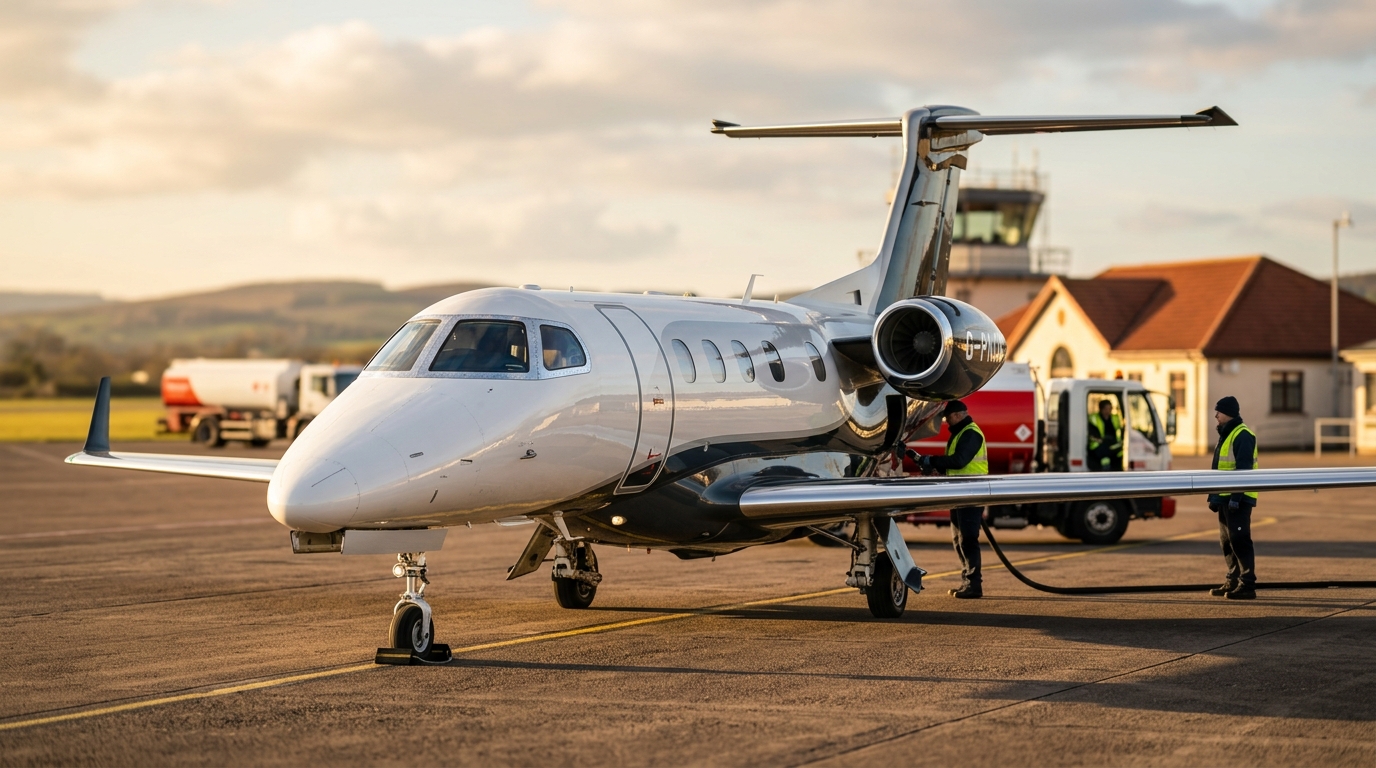
A short hop: Farnborough (EGLF) to Nice (LFMN). A four-passenger Embraer Phenom 300E, about 1 hour 45 minutes in the air, priced at £12,000 one way. Light-jet sectors on this route typically fall between £9,000 and £14,000. The breakdown:
- Operator cost: £7,900
- Fuel: £1,600
- Landing, handling and airport fees: £1,000
- Taxes: £600
- Broker fee: £900
Twenty per cent of £900 is £180. A concierge working from 10% of the quote would have expected £1,200, nearly seven times the real figure.
A transatlantic: Farnborough (EGLF) to Teterboro (KTEB). A Gulfstream G650ER, with a cabin 8 ft 2 in wide and 6 ft 3 in high, covers the roughly seven-hour westbound sector nonstop. The Bombardier Global 7500 and Dassault Falcon 8X are its direct comparators, and one-way pricing typically runs to £70,000 to £95,000. Take £78,000 as the example:
- Operator cost: £48,000
- Fuel: £16,500
- Landing, handling and overflight fees: £4,500
- Taxes: £3,300
- Broker fee: £5,700
Twenty per cent of £5,700 is £1,140, where 10% of the headline would have suggested £7,800. Sectors this size are rare for any one hotel, so treat £1,140 as the upper end of what a single introduction is likely to produce.
An empty leg: Geneva (LSGG) to Farnborough (EGLF). A Cessna Citation Longitude is repositioning after a drop-off, so the seat is sold at a discount to fill a flight that was happening anyway. The sector takes about 1 hour 50 minutes and is priced at £5,900 against a standard one-way charter of £11,000 to £13,000.
- Operator cost, fuel included: £4,200
- Landing, handling and airport fees: £850
- Taxes: £450
- Broker fee: £400
Twenty per cent of £400 is £80. Empty legs carry the thinnest fees because the operator has already priced the aircraft's journey and the broker's room is small; some brokers pay a flat sum or exclude them from the share entirely, so ask.
Set the three side by side and the pattern is clear. How a concierge's share is calculated matters more than its percentage: the same 20% produced £180, £1,140 and £80, and none of them came close to a slice of the headline. An empty leg's real value is the introduction, since a guest who tries a jet at that price is the natural candidate for a full charter next time.
Before You Make the Introduction: Hotel Policy, Guest Disclosure and Tax Treatment
Check your employment contract before you check the broker's rate card.
Many hotel groups prohibit staff from accepting payments from third-party suppliers, or require them to be logged in a gifts and hospitality register. Some allow it with written approval from a general manager; others prefer that the payment goes to the hotel, a team fund or a nominated charity. Ask HR in writing, and keep the reply.
Disclosure to the guest matters as much as disclosure to your employer. Tell the guest plainly that you may receive a referral fee from the broker, and confirm with the broker that the price the guest pays is the same with or without your introduction. A guest who discovers an undisclosed payment later will question every other recommendation you make; one who was told up front rarely minds.
A simple line works: "The broker pays me a small referral fee for introductions. It does not change your price, and you are free to ask them for a quote directly."
An undisclosed payment to an employee can also breach the employer's policy and, in serious cases, anti-bribery legislation such as the UK Bribery Act 2010. Written approval and open disclosure remove that risk.
Tax treatment depends on how the payment reaches you. Referral income paid to you personally is generally taxable in the UK and needs declaring; small amounts of occasional income may fall within the £1,000 trading allowance, while payments routed through your employer's payroll are taxed as earnings. This is general information, not advice, so confirm your position with an accountant or HMRC.
Payment timing follows the trip, not the enquiry. Commission normally accrues only once the guest has paid the broker in full and the flight has operated, then is paid on a monthly cycle, commonly within 30 days of the flight. A cancelled charter typically produces no commission, even where the guest paid a deposit first.
Estimating Your Earnings Before the Guest Asks: Questions to Put to Any Charter Broker
Six questions, put to any broker before your first introduction, turn a vague promise into a number you can plan around.
- Is my share calculated on your fee, the net charter price or the headline quote?
- What fee range is typical for a trip like the one my guest describes?
- Does the share apply to the first trip only, or to every repeat booking?
- How are empty legs, ground transport and cancellations treated?
- Who pays me, when, and in what form: personally, through the hotel or to a company?
- Can I have these terms in writing, and will my guest pay the same price without my introduction?
Then run the arithmetic yourself: ask for a fee range, multiply by the share, and plan on the lower end. A 20% share of a £600 to £1,000 fee on a short hop comes to £120 to £200; the same share on a £4,000 to £7,000 fee on a long-haul sector comes to £800 to £1,400.
Write the estimate down before the introduction. If the guest later asks what you gain, you can answer with a real figure rather than a guess.
What separates a strong referral relationship from a one-off lead is rarely the percentage. It is whether the broker answers your guest within the hour, tells you honestly what a trip will pay, and pays when it said it would, so that the second and third introductions are easy to make.