What Is the Bombardier Global 7500? Range, Speed, and Why It Matters
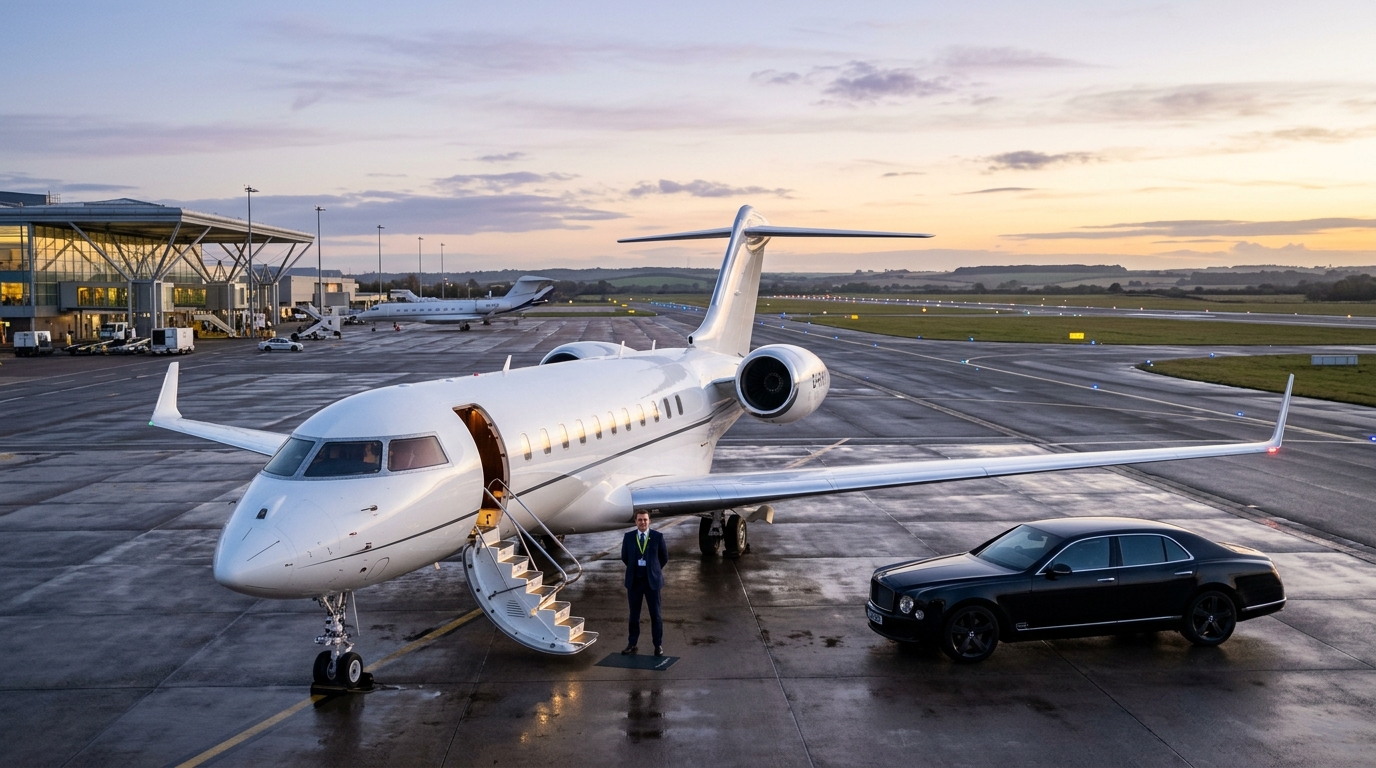
Fourteen hours after departing Farnborough (EGLF), a Bombardier Global 7500 arrives at Singapore Changi (WSSS) without having stopped once for fuel. Most competing ultra-long-range jets require a landing somewhere over the Gulf to complete the same sector.
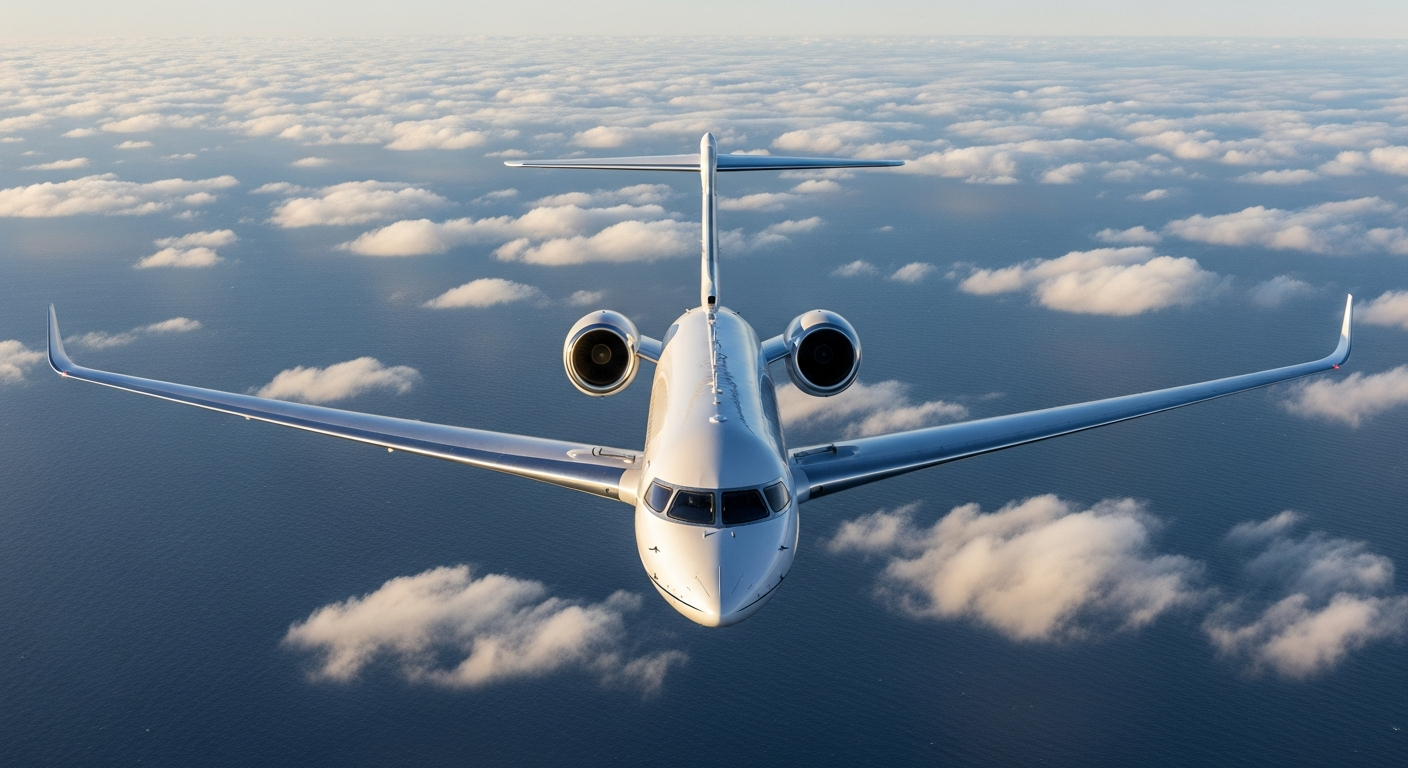
Bombardier certified the Global 7500 in 2018, and it has since established a flight record that rivals have found difficult to match. Maximum range sits at 7,700 nautical miles; cruising speed reaches Mach 0.925 at altitude; standard configurations carry between ten and fourteen passengers across a cabin that spans 54.5 feet from the forward bulkhead to the aft galley.
The significance of 7,700 nautical miles is easier to appreciate with specific routes in mind. London to Singapore covers approximately 6,750 nautical miles; New York Teterboro (KTEB) to Dubai (OMDB) covers roughly 6,800; London to Tokyo Haneda stretches to around 5,900. Each of these sectors fits inside the Global 7500's envelope with a standard configuration and full load, where competing jets require a fuel stop somewhere over Central Asia or the Gulf.
Bombardier global 7500 private jet charter commands its premium positioning because the aircraft eliminates routing compromises that well-resourced clients have historically accepted. A fuel stop in Baku or Muscat adds three hours to a journey, disrupts sleep cycles on overnight sectors, and introduces weather and slot risk at an intermediate airport. The Global 7500 removes the problem entirely.
The aircraft's GE Passport engines are certificated to Mach 0.925, placing it among the fastest business jets in service. On a London-to-Singapore routing, this translates to flight times of approximately 13.5 hours on favourable winds. It is the aircraft that makes genuinely new routes possible on private terms, and that, more than any specification, is why operators and clients treat it as a separate category.
The Four Living Spaces: A Cabin Designed for Long-Haul Comfort
At hour fourteen of a Singapore sector, cabin configuration stops being an amenity and becomes something closer to a medical question. Bombardier designed the Global 7500 around four distinct zones specifically to allow passengers to live normally across a full working day and night.
The forward section functions as a conference and lounge area: four club seats, a credenza, and enough table surface for serious document work. This is where productive hours happen in the first third of a long-haul flight, before fatigue begins to accumulate and before the social dynamics of the cabin shift toward rest.
The second zone transitions into a social living space, typically configured with a divan and additional seating. On shorter sectors, it serves as overflow lounge space. On overnight routes, it becomes the natural transition point between working and sleeping, where passengers take a light meal or decompress before moving aft.
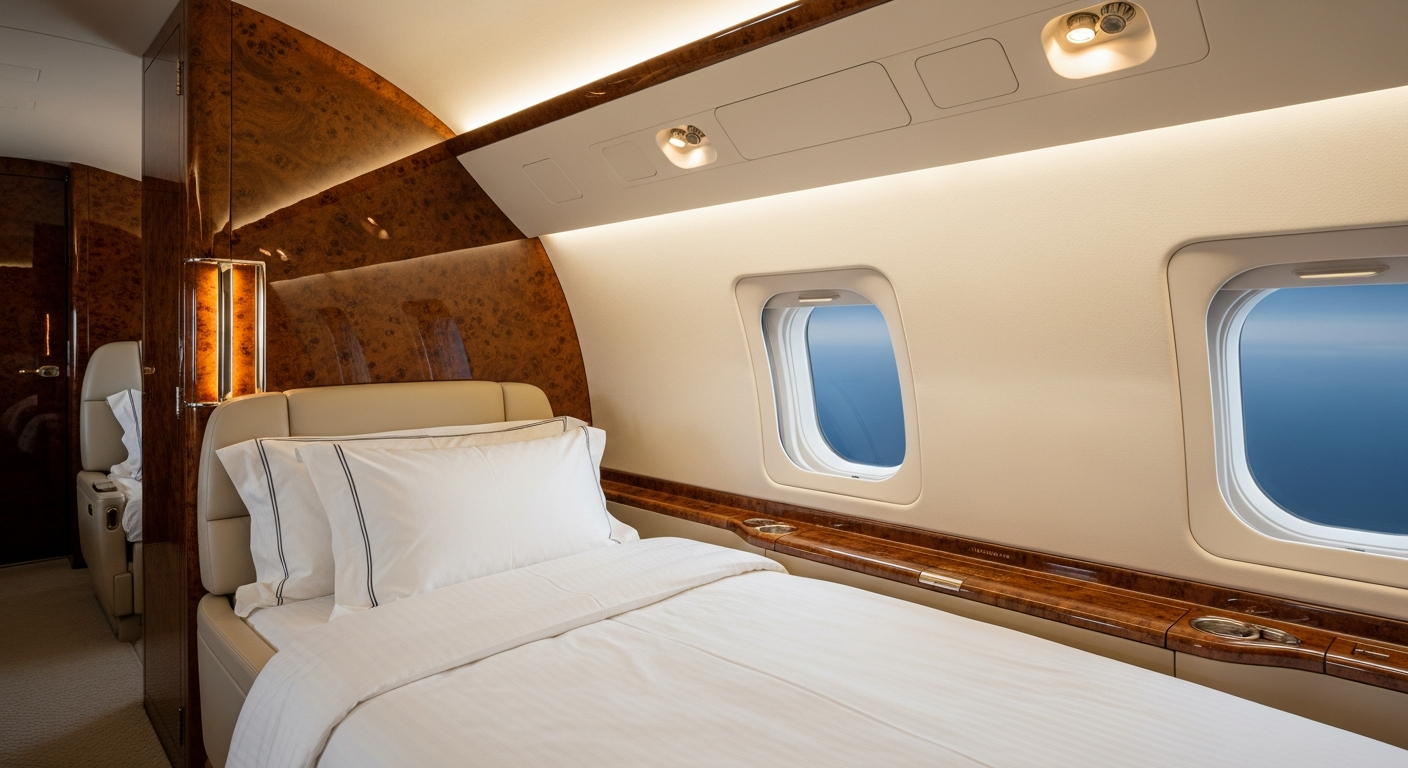
The third zone is the stateroom, and it is the feature that most meaningfully separates the Global 7500 from shorter-range competitors. Bombardier's Nuage seat, developed specifically for this aircraft, reclines into a full lie-flat bed with a mattress surface exceeding six feet. A dedicated wardrobe and private storage convert the zone into something closer to a hotel suite. Passengers who use the stateroom arrive in Singapore having genuinely slept; that outcome, on a 14-hour sector, is the core commercial proposition of the aircraft.
The fourth zone is the galley, positioned aft and operated by a dedicated flight attendant. Configured for multi-course service across time zones, it represents a meaningful upgrade from the galley arrangements found on shorter-range aircraft. In-flight catering options on the Global 7500 include proper china service, hot preparation, and temperature-controlled storage for wines and spirits.
Cabin height reaches 6 feet 2 inches; width spans 8 feet at the widest point. Bombardier pressurises the cabin to an equivalent altitude of 2,900 feet at cruise height, materially reducing passenger fatigue and dehydration compared to older business jet standards.
The Routes Only a Global 7500 Can Fly Nonstop
The practical case for Bombardier global 7500 private jet charter begins with route planning, not interior preferences.
London to Singapore is the defining example. Departing EGLF Farnborough or EGSS Stansted, a Global 7500 crosses Central Asia without a fuel stop and arrives at WSSS Changi approximately 13.5 to 14 hours later. No intermediate landing means no passport control in Baku at 03:00 local time, no crew rest requirements that extend ground time, no exposure to ground delays at airports that sit at the edge of operational coverage.
New York Teterboro (KTEB) to Dubai (OMDB) covers a comparable distance at roughly 6,800 nautical miles. This sector carries commercial significance for finance and energy clients who divide working time between the two cities. A nonstop private routing that avoids stops in eastern Canada or western Europe has genuine operational value.
London to São Paulo (SBGR) runs approximately 5,600 nautical miles, technically within the envelope of some competing long-range jets. A Gulfstream G550 or Global 6000, by contrast, requires a fuel stop at Dakar or Sal, adding at minimum two hours to an already long sector. The Global 7500 covers the distance without interruption, arriving with full crew rest capacity intact.
Sydney represents the outer limit of what is currently possible. At roughly 10,500 nautical miles from London, YSSY requires a single stop even for the Global 7500; Singapore or Kuala Lumpur serves as the natural break point. The aircraft remains the most capable option for each half of the sector.
For any routing between 5,500 and 7,700 nautical miles without a practical intermediate airport, the Global 7500 is, at minimum, the most capable option and often the only rational one.
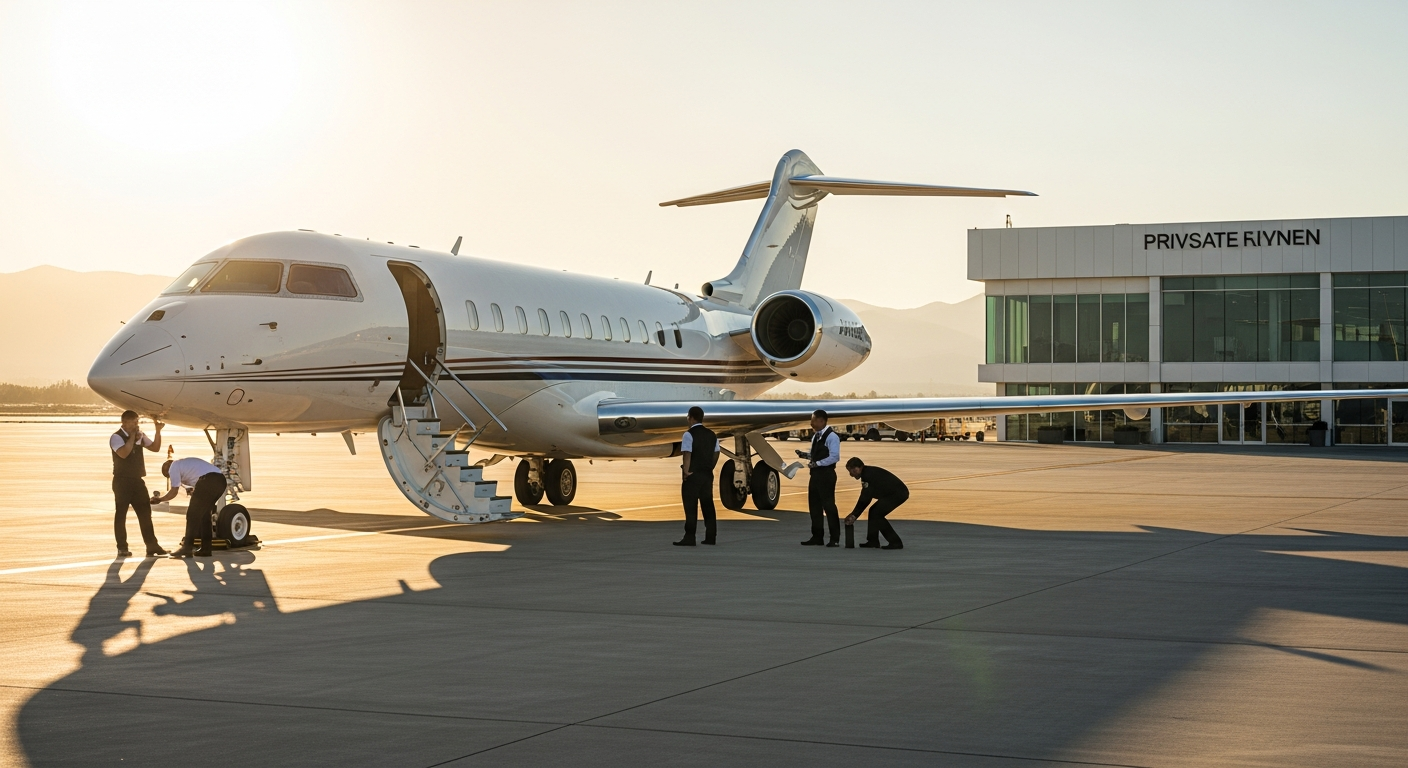
Charter Economics: What It Costs and When the Price Is Justified
Hourly charter rates for a Bombardier global 7500 private jet charter typically range from £16,000 to £22,000 per flight hour, depending on aircraft positioning, operator, and seasonal demand. A London-to-Singapore sector of 14 hours produces a total charter figure in the range of £280,000 to £380,000 before positioning fees, landing charges, and overflight permits across multiple sovereign airspaces. Peak-season departures, particularly over major international events or school holidays, tend toward the upper end of that bracket.
These figures warrant practical context. A group of ten passengers on a 14-hour sector divides the cost to roughly £28,000 to £38,000 per person for an entirely private journey with a dedicated bedroom. For delegations travelling on compressed schedules, where arrival condition, flexible departure timing, and operational security carry genuine value, the arithmetic becomes defensible.
The decision threshold sharpens on routes where alternatives require fuel stops. If the competing option is a Gulfstream G650ER or Global 6000 with a mandatory 90-minute fuel stop in Muscat at 02:00 local time, the additional cost for nonstop Global 7500 routing is not a luxury; it is the cost of arriving functional rather than depleted.
Positioning fees apply whenever the aircraft's home base differs from the departure point. On transatlantic or transpacific sectors, this can add several hours' worth of ferry cost to the total. Clients with round-trip requirements negotiate more efficiently by absorbing a single positioning fee across both legs of the journey.
Fractional ownership programmes for the Global 7500 operate through NetJets and Flexjet among others. Per-hour costs under these schemes differ from ad-hoc charter; the primary benefit is access reliability and guaranteed availability on high-frequency ultra-long-range programmes rather than direct cost reduction.
Global 7500 vs Gulfstream G700: Choosing Between the Two Ultra-Long-Range Flagships
Both aircraft entered the ultra-long-range category within a few years of each other, and both claim its top position. The differences are real but narrower than either manufacturer's promotional material suggests.
The Global 7500 holds a range advantage of approximately 200 nautical miles over the G700 in standard configuration. In practical terms, this margin is decisive on fewer than a handful of city pairs globally; for most ultra-long-range routes both aircraft arrive at the destination without a stop.
Where they diverge more meaningfully is cabin philosophy. The Global 7500's four discrete zones emphasise spatial separation: working, social, sleeping, and service areas are genuinely independent. The G700 configures around Gulfstream's Symmetry flight deck and a cabin that prioritises maximum passenger count over zone separation.
For passengers who need to sleep independently of others aboard, the Global 7500's stateroom is the more coherent solution. For groups prioritising maximum social space and a higher passenger count, the G700's architecture performs differently. Neither is universally superior; the answer depends on what the journey is actually for.
Charter pricing for both aircraft runs in a comparable bracket; operators price to market, and availability frequently determines the practical choice before preference does.
One operational factor favours the Global 7500 on Asia-Pacific routes: Bombardier's maintenance and AOG recovery infrastructure across the Middle East and Southeast Asia is established and well-staffed. For clients running high-frequency programmes through those regions, this infrastructure point carries weight in aircraft selection.
The Bombardier global 7500 private jet charter proposition is strongest when the route sits at the outer limit of the G700's envelope, when four-zone cabin privacy is a genuine operational requirement, or when the programme tilts heavily toward Asian destinations where Bombardier's support network adds measurable reliability.