Why Abu Dhabi Closes the Season: Yas Marina Under the Lights
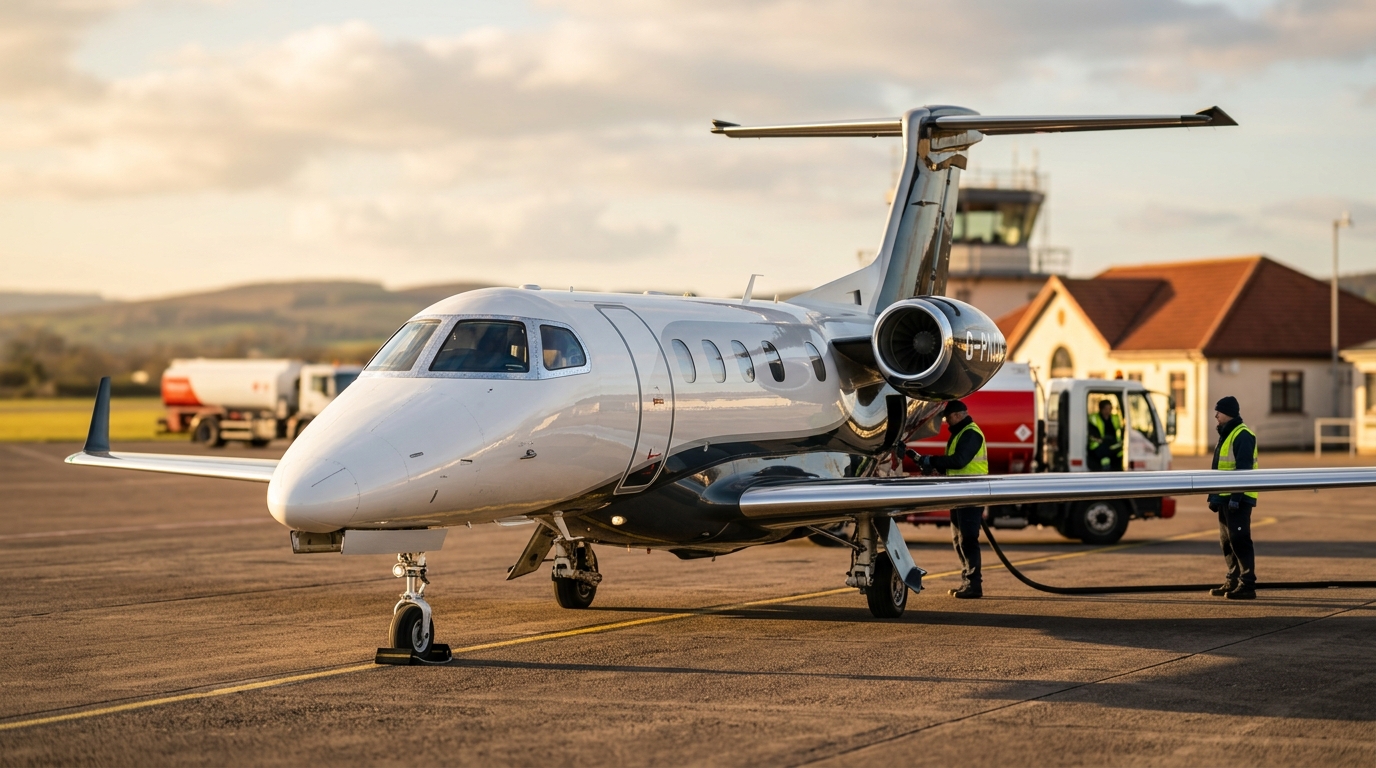
Al Bateen Executive Airport (OMAD) stops taking slot requests from aircraft that are not already based there well before the FIA confirms the final race weekend timings, and by the week of the race its ramp is fully committed. That single operational fact frames almost everything else about flying into Abu Dhabi for the finale: arranging an Abu Dhabi Grand Prix private jet is less about the glamour of the trip and more about a 96-hour surge of arrivals converging on two airports, one of which has genuinely limited capacity for visiting business aircraft.
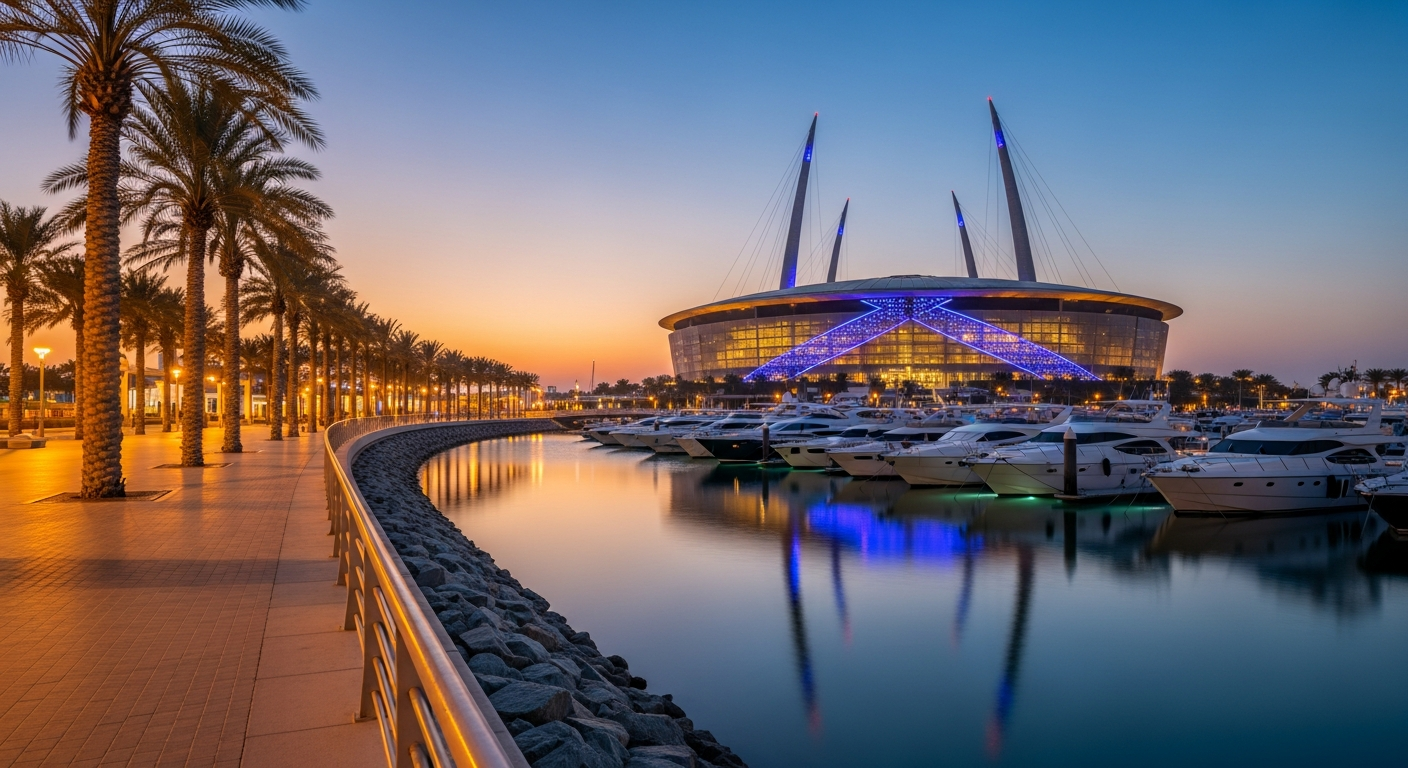
Yas Marina Circuit earns its closing slot on the calendar because it is built for exactly this kind of finish. The 5.28km lap runs partly through a marina, past the W Abu Dhabi hotel, which straddles the track itself, and the final sector is lit by close to 5,000 individual floodlight fittings so the race finishes as darkness falls over the Gulf. No other circuit on the calendar stages its title-deciding laps under lights in quite the same way.
That timing matters commercially as much as visually. Because the finale falls after every other race has been run, it has decided the drivers' championship outright in 2010, 2014 and 2021, and title permutations are rarely settled before teams even arrive. When the standings are still live going into the last weekend, charter enquiries for the Gulf spike in the final fortnight of the season, arriving on top of an airport system already tight from Formula 1 team logistics, VIP hospitality flights and the usual December corporate traffic through the UAE.
The exact race weekend for the 2026 finale had not been formally confirmed at the time of writing, though the established pattern points to early December at Yas Marina, with the precise dates locked in closer to the event once the FIA publishes the finalised calendar. Anyone booking ahead of that confirmation should treat early December as the working assumption and build in flexibility either side of it, rather than fixing travel plans to a specific day before the sanctioning body does.
Abu Dhabi International vs Al Bateen Executive: Choosing the Right Airport
Abu Dhabi International Airport (OMAA, IATA: AUH) is the default answer for most charter operators, and for good reason: it has multiple runways, round-the-clock customs and immigration, and enough FBO capacity to absorb race week traffic without turning away based aircraft. Etihad's executive handling facility and several independent FBOs on the field mean a private jet arriving on race week competes for ramp space rather than being locked out entirely.
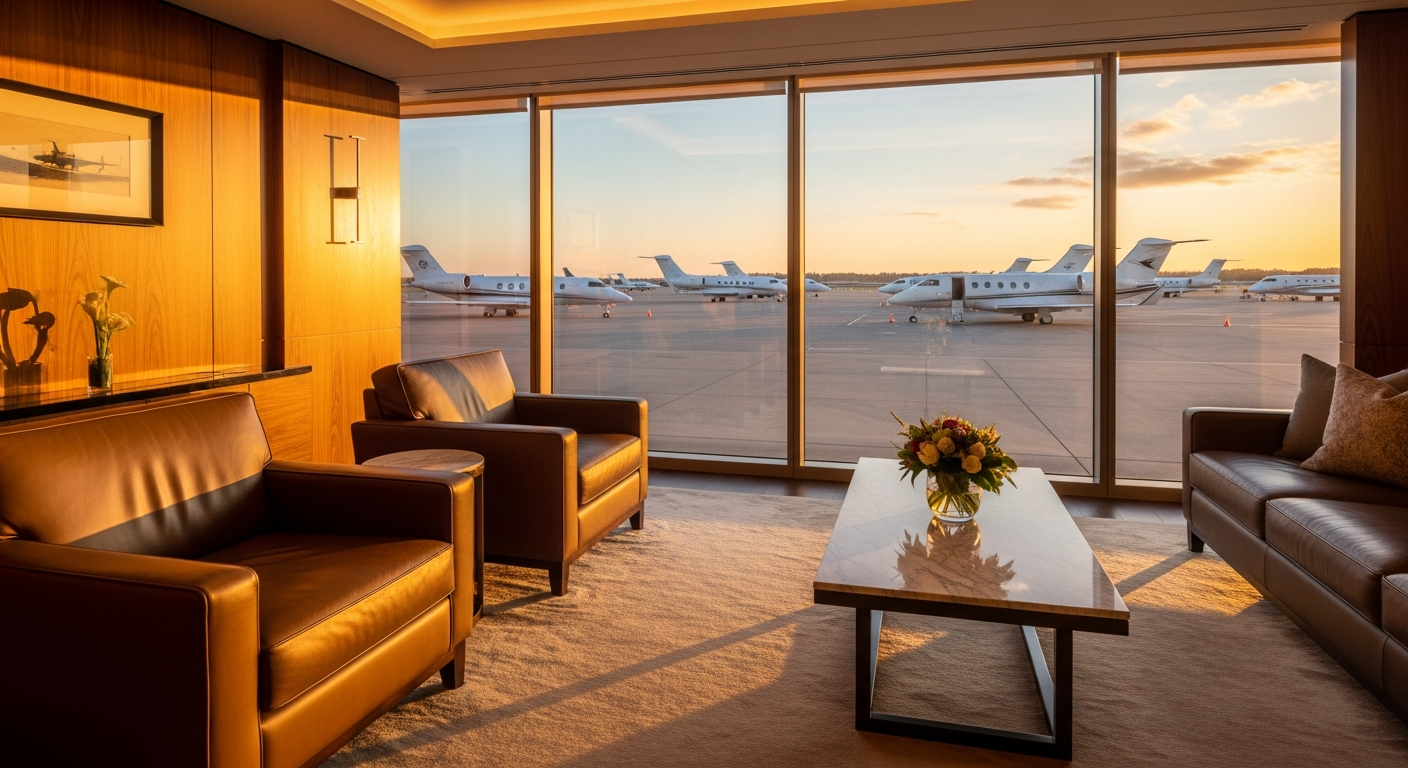
Al Bateen Executive Airport (OMAD) is the more exclusive alternative, purpose-built for business aviation only, closer to the Yas Island hotels and the circuit, and correspondingly more convenient once you are on the ground. The trade-off is capacity: a single runway and a smaller apron mean slot requests for Abu Dhabi Grand Prix private jet arrivals during peak race week days can be declined outright once the based-aircraft quota and early bookings fill the schedule, regardless of budget.
The practical choice is which side of that trade-off matters more to you: guaranteed access at OMAA with a 25 to 35 minute transfer to Yas Island depending on traffic, or the shorter 15 to 20 minute run from OMAD if you can secure a slot early enough. Operators booking on behalf of clients with fixed race morning timings generally push for Al Bateen first and treat Abu Dhabi International as the fallback, not the reverse, because a denied slot request at OMAD surfaces early enough to rebook at OMAA, while leaving it the other way round risks discovering the shortfall only days before departure.
Both fields handle business aviation customs efficiently outside peak arrival banks, but race week compresses those banks into a handful of hours either side of Friday practice and Sunday's grid, so even OMAA's larger capacity should not be treated as a same day guarantee.
Booking Windows: Why Race Week Slots Disappear Faster Than You Think
Charter brokers handling an Abu Dhabi Grand Prix private jet booking will tell you the same thing: the calendar that matters is not race weekend, it is the six to eight weeks before it. Slot requests at Al Bateen Executive for the peak arrival days, typically the Thursday and Friday before the race, are frequently allocated before the championship picture is even mathematically settled.
Aircraft positioning adds a second constraint on top of slots. Long range aircraft capable of a nonstop Gulf run are a finite fleet across Europe, and operators reposition them toward Gulf demand as soon as the finale approaches, which means the specific tail you want, not just an airport slot, can be gone while the schedule still looks open. Booking six weeks out is realistic; booking six days out limits you to whatever is still uncommitted, usually a smaller cabin or a routing via a fuel stop instead of a direct one.
Pricing follows the same curve. A one-way charter from a London area airport to Abu Dhabi on a long range aircraft such as a Gulfstream G650ER typically runs £45,000 to £65,000 booked with reasonable lead time; the same aircraft and route booked inside the final week of availability can climb toward the top of that range or beyond it, simply because the operator is pricing scarcity rather than the flight itself.
The most reliable signal for readers without an existing broker relationship is to treat the moment the championship becomes mathematically live, usually after the preceding race, as the trigger to lock an aircraft rather than wait for official confirmation of race times. By the time the FIA publishes the finalised schedule, the good slots and the right aircraft are frequently already assigned to whoever asked first.
Aircraft Choice for the Gulf Run: Long-Range Nonstop vs Midsize with a Fuel Stop
Matching the aircraft to the sector is where an Abu Dhabi Grand Prix private jet charter either earns its price or becomes an expensive compromise. The London to Abu Dhabi sector covers roughly 2,970 nautical miles great circle, which sits right at the edge of what a super midsize aircraft can cover against winter headwinds, and comfortably inside range for the long range heavy jets built for exactly this kind of sector.
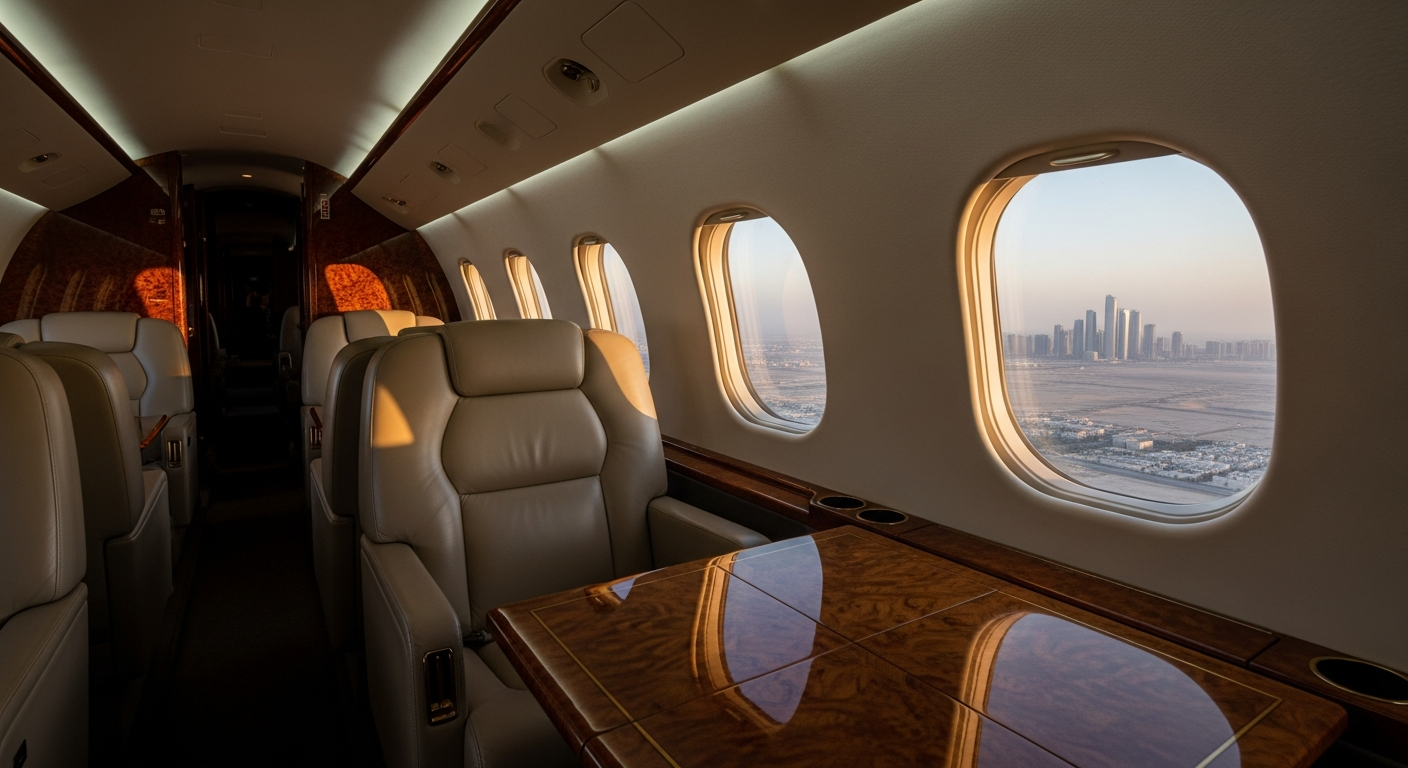
The Gulfstream G650ER and the Bombardier Global 7500 are the two aircraft most operators reach for first. The G650ER's published range of 7,500 nautical miles and the Global 7500's 7,700 nautical miles both cover London to Abu Dhabi nonstop with fuel to spare, and both offer a flat floor cabin with a genuine bedroom style rear suite on the Global 7500, useful for a night departure timed to land fresh ahead of Friday practice. Cabin height on both sits at 6ft 2in, noticeably taller than the midsize category below them.
A Bombardier Challenger 350, by contrast, has a published range of around 3,200 nautical miles, workable against favourable winds but tight enough on a winter westbound headwind that many operators plan a technical fuel stop, commonly in Cyprus or Egypt, adding roughly an hour to total journey time. The trade-off is cost: a Challenger 350 with a fuel stop typically prices at £30,000 to £40,000 one-way for the sector, against £45,000 to £65,000 for a nonstop heavy jet, a meaningful gap for groups of four to six where the extra cabin volume of a G650ER is not the deciding factor.
Groups of eight or more should default to the long range cabins regardless of budget sensitivity: the Challenger 350 seats a maximum of ten in a high density configuration but is genuinely comfortable for six on a sector this long, while the Global 7500's four zone cabin keeps eight passengers workable, resting and dining without the compromises a fuel stop routing adds on top of an already long day.
Beyond the Chequered Flag: Yas Island, Etihad Arena, and Pairing with Dubai
Race day itself finishes under floodlights, but the weekend's other fixed point is Etihad Arena, which has become Yas Island's default venue for the post race concert programme, drawing headline acts that turn Sunday night into as much of a draw as the race for some travelling groups.
W Abu Dhabi, Yas Viceroy Abu Dhabi and the Yas Island resort cluster sit within a 10 to 15 minute transfer of both Yas Marina Circuit and Etihad Arena, which is the practical reason so many charter groups build their entire weekend around Al Bateen Executive rather than Abu Dhabi International: the shorter ground transfer matters more across three or four days of arena shows, circuit sessions and hotel changes than it does for a single airport run.
Dubai International (OMDB) sits roughly 90 minutes by road from Abu Dhabi, close enough that groups flying an Abu Dhabi Grand Prix private jet increasingly treat the trip as two cities rather than one, landing into Abu Dhabi for the race and adding two or three nights in Dubai either side rather than flying straight home. For that pairing, repositioning the aircraft onward to Dubai World Central (OMDW) rather than flying home and back out again usually saves a full day of the schedule, at the cost of a modest repositioning fee that most operators will quote upfront.
That flexibility, more than any single element of the race weekend, is the real case for booking a private jet for this trip rather than treating flights and hotels as separate bookings: a chartered aircraft can sit and wait through a changed race schedule or an extended Dubai add on in a way that fixed commercial connections cannot, and in a season finale where the exact dates are still provisional, that flexibility is worth more than usual.