 Farnborough
 Nice
Nice
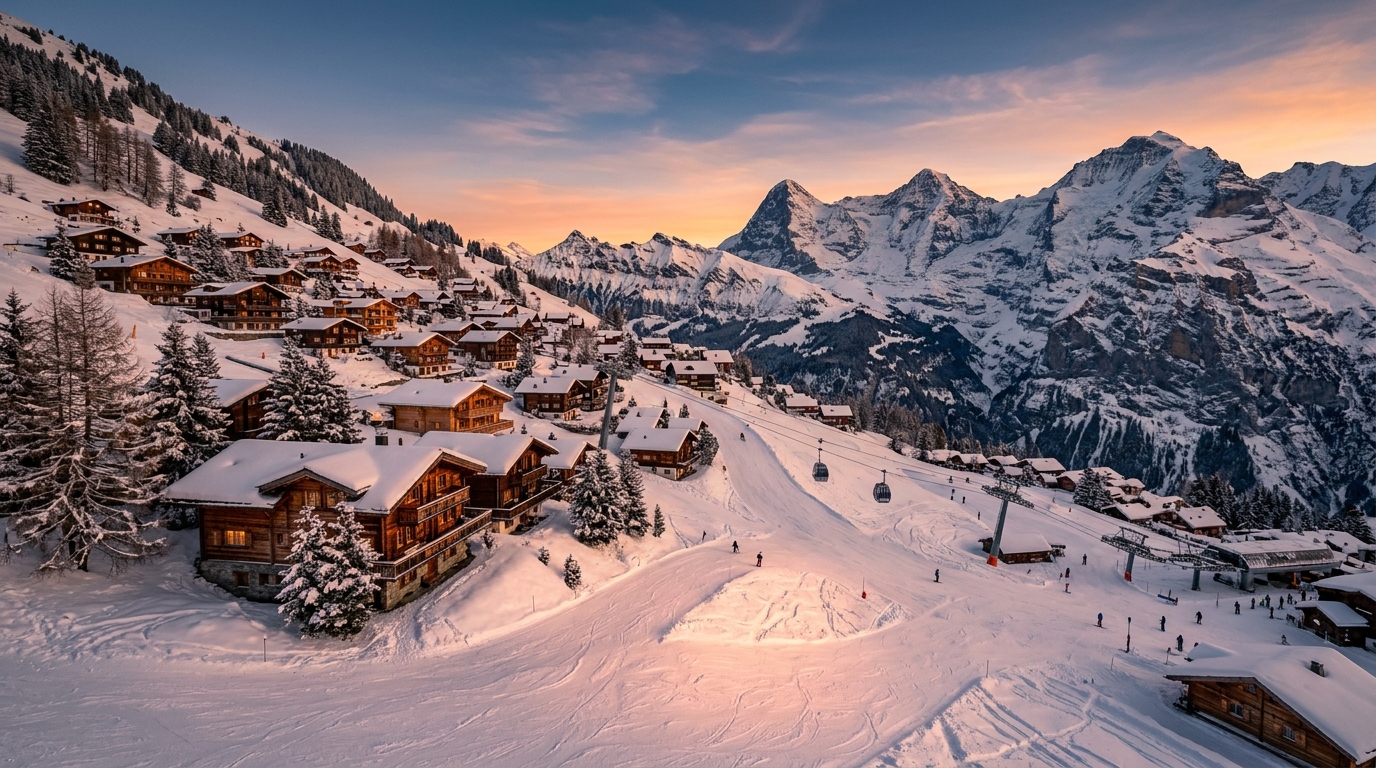
Why the Alps Reward Flying Private More Than Almost Any Other Trip
LFLJ, Courchevel's altiport, has a runway that slopes at an 18.5% gradient and measures just 537 metres, a combination that rules out virtually every business jet built for commercial charter work. That single fact explains more about ski travel logistics than any amount of resort marketing: the mountains that hold the best snow are, almost without exception, served by airports that were never designed for jets at all.
This is what separates a private jet ski season in the Alps from most other premium travel decisions. On a beach holiday, chartering an aircraft buys comfort and time. On a ski trip to Courchevel, Verbier, or Val d'Isère, it buys something closer to a workaround for a genuine engineering problem: altitude, gradient, and runway length that scheduled aviation simply cannot serve.
Groups travelling with skis, boots, and boards also benefit from baggage allowances that scheduled carriers do not offer at short notice. A family of six with full kit can load a Bombardier Challenger 350 without the weight negotiations that come with fixed cargo holds elsewhere.
The other advantage is timing control. A Friday-evening departure after work and a Sunday-night return, both built around snow forecasts rather than a fixed timetable, are only realistic when the aircraft waits for the group rather than the other way round. For anyone planning a private jet ski season Alps trip around work commitments, that flexibility is the actual product being bought, not the cabin finish.
Scheduled connections to the airports nearest these resorts are also thin outside the main season, with many routes dropping to a handful of weekly flights or disappearing entirely between April and November. A chartered aircraft removes that seasonal dependency, since the operator flies the sector on demand rather than on a published timetable that assumes low winter interest.
The Airport Problem: Why Courchevel, Verbier, and Val d'Isère Don't Work Like Normal Destinations
None of the three resorts that dominate Alpine ski season conversation sit next to an airport capable of handling a typical business jet on approach. Courchevel's altiport is essentially closed to jet traffic; Verbier has no airport of its own and relies on Sion, forty-five minutes away by road; Val d'Isère depends on Chambéry or Geneva, both over an hour's transfer from the slopes.
Each of these airports carries its own restriction. Sion (LSGS) sits in a valley that requires a visual, terrain-based approach; only pilots with specific mountain qualification are permitted to fly it, and operators must hold the relevant authorisation before they can even file the route. Chambéry (LFLB) runs a seasonal operation, typically open for commercial jet traffic from December through April, with runway capacity that tightens sharply during the two or three weeks either side of Christmas.
Geneva (LSGG) has none of these restrictions but sits further from every resort, which trades a straightforward approach for a longer road transfer. Booking a private jet ski season Alps trip therefore starts with a genuine trade-off between airport convenience and ground time, not a simple choice of "nearest airport wins."
The mountain qualification pilots need for Sion and Chambéry is not a formality. It requires a set number of supervised approaches into the specific airport before a captain is cleared to fly it commercially, which is why many charter operators maintain only a handful of crews certified for each field rather than clearing their whole fleet roster.
Charter brokers who know the region will route a client to whichever airport shortens the total door-to-door journey for that specific resort and week, rather than defaulting to the biggest airport on the map.
Courchevel's Altiport: The Runway That Grounds Most of the World's Jets
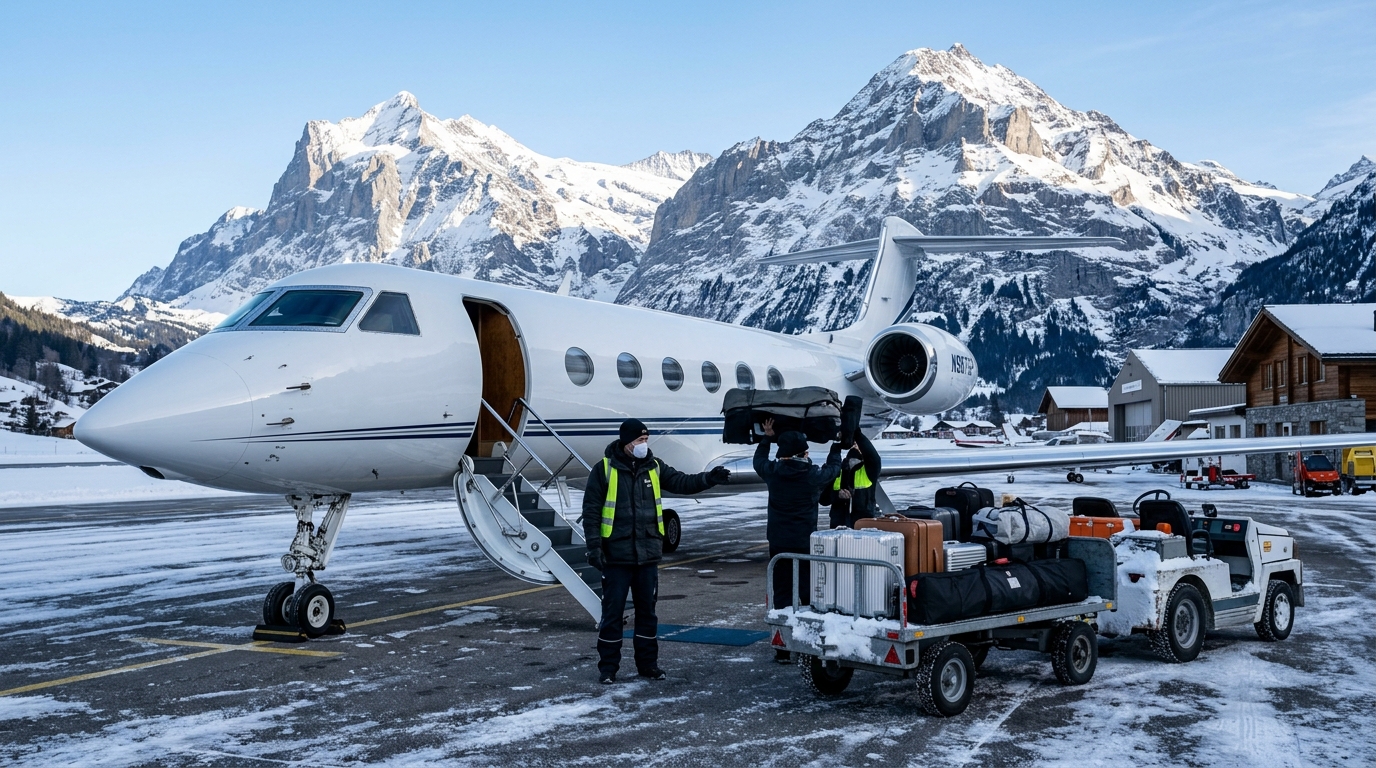
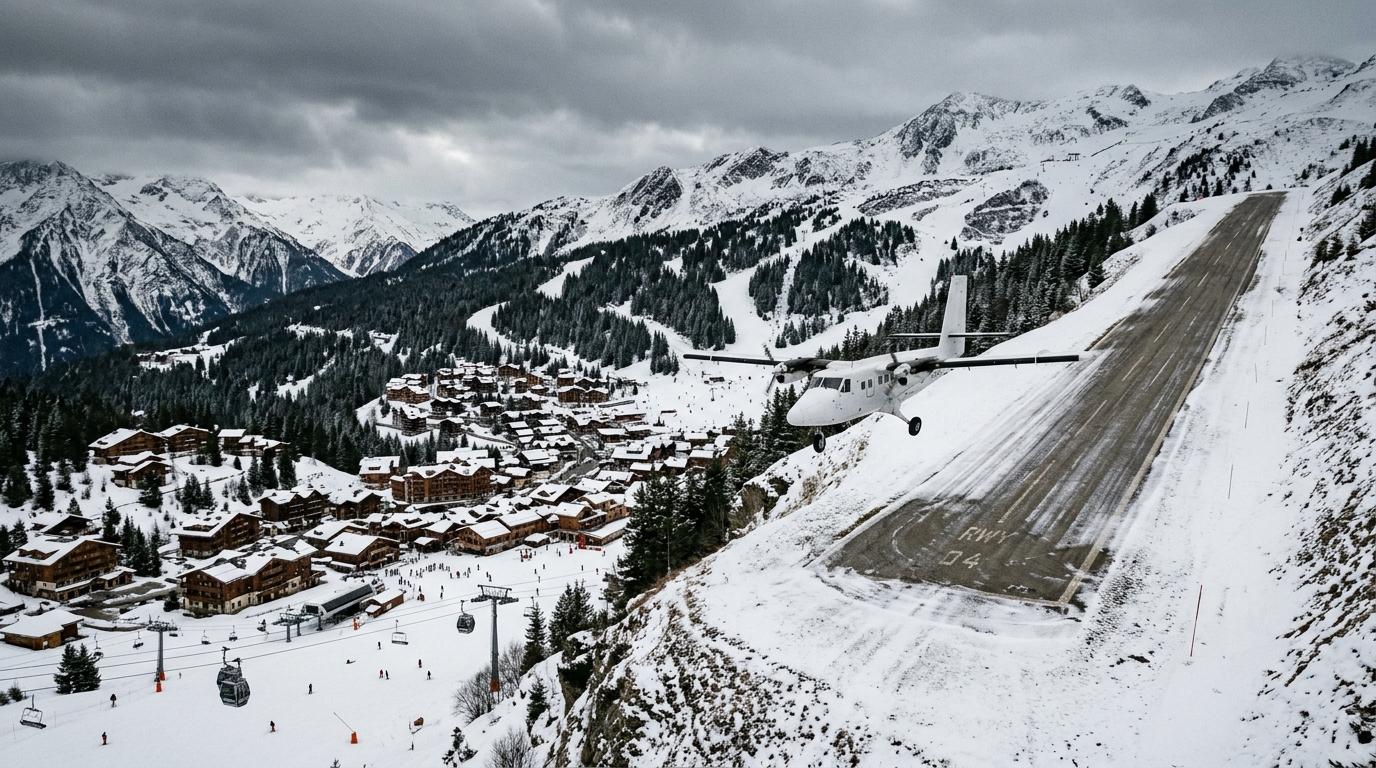
A 537-metre runway on an 18.5% slope, landing uphill and taking off downhill in a single fixed direction, is not a limitation that can be engineered around with a more powerful aircraft; it is a physical constraint that excludes the category outright. Courchevel's altiport (LFLJ) was built for turboprops and helicopters, and that remains true today.
Aircraft that do operate into Courchevel are almost exclusively short-field turboprops such as the Pilatus PC-12 and the Daher TBM 940, flown by pilots holding a specific altiport qualification that very few operators maintain across their fleets. No mainstream light or midsize jet, from an Embraer Phenom 300E to a Cessna Citation CJ4, is certified to land there, regardless of how experienced the crew.
This catches out travellers who assume "private jet to Courchevel" is a literal routing rather than shorthand for a broader itinerary. The realistic version of that trip lands at Chambéry or Geneva and finishes with a road transfer of roughly one hour to ninety minutes, depending on traffic and which of Courchevel's satellite villages is the final destination.
Brokers who present Courchevel as a direct jet destination without explaining the altiport's restrictions are setting up a client for a missed connection at the one time of year when rebooking options are thinnest.
Helicopter transfer from Chambéry or Geneva directly to Courchevel's altiport is the one alternative that avoids the road transfer altogether, cutting the final leg to well under twenty minutes. It carries its own weather sensitivity, though, and is best treated as an add-on to a fixed-wing charter rather than the primary plan.
Geneva, Chambéry, and Sion: The Real Gateways, and the Transfer That Follows
Geneva handles more Alpine ski traffic than Chambéry and Sion combined, and for good reason: LSGG runs a standard instrument approach, operates around the clock, and accepts anything from a Phenom 300E to a Bombardier Global 7500 without the certification requirements that limit the smaller mountain airports. The cost is distance; transfers to Verbier run roughly ninety minutes, to Courchevel and Val d'Isère closer to three hours depending on the specific village and road conditions.
Chambéry cuts that transfer time substantially for Courchevel, Méribel, and Val d'Isère, bringing it down to around one hour to ninety minutes, but only during its seasonal operating window and with runway slots that fill quickly around the two peak weeks either side of Christmas. Sion is the better choice for Verbier specifically, at around forty-five minutes by road, though it demands an operator certified for the valley approach.
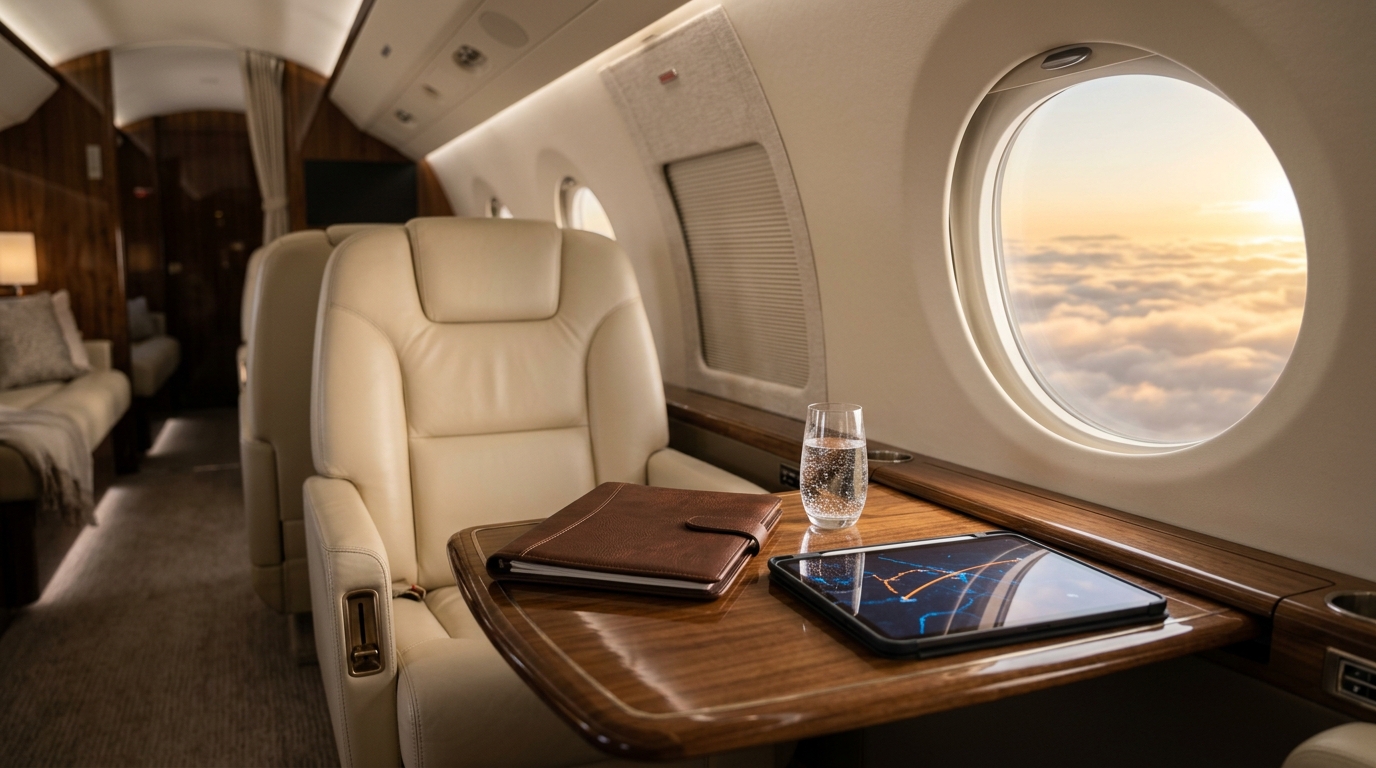
The Embraer Phenom 300E suits a Geneva-bound group of up to six travelling light, with cabin room for kit stowed in the aft baggage compartment rather than the cabin itself. Groups of eight or more, or anyone carrying full ski and board equipment for a week, should book a Citation Longitude or a Challenger 350 for the additional hold space and cabin width.
A London Farnborough (EGLF) to Geneva charter on a midsize jet typically runs £11,000 to £16,000 one-way in a standard week, rising toward £20,000 or more during the Christmas and February half-term peaks when demand outstrips available airframes. Chambéry and Sion routings carry a modest premium over Geneva because of the specialist crew qualifications required, generally adding £1,500 to £3,000 to a comparable one-way quote.
Clients flying in from further afield, whether that is New York or the Gulf, tend to route through Geneva on a longer-range aircraft such as the Dassault Falcon 8X before switching to a smaller jet or car for the final leg, since Falcon 8X and equivalent large-cabin aircraft are not practical choices for the shorter Chambéry or Sion approaches. Lyon (LFLL) is worth naming as a fallback for the same reason: it has no altitude or slope restrictions at all, at the cost of a transfer that stretches to two hours or more for most resorts.
Booking Around the Calendar: Christmas, New Year, and February Half-Term Pinch Points
Two windows each year define the entire private jet ski season Alps calendar: the fortnight bridging Christmas and New Year, and UK February half-term, which typically falls in the second or third week of the month. Both compress demand into the same handful of resort weekends, and aircraft availability at Chambéry and Sion in particular starts tightening eight to ten weeks in advance.
Early-season charters, before the third week of December, carry the additional variable of snow reliability at lower-altitude resorts, which argues for building a flexible one- or two-day departure window into the booking rather than fixing a single date months out. Late-January and early-March weeks, by contrast, tend to offer the most consistent snow with noticeably lower charter premiums, since they fall outside both peak pinch points.
Clients who commit to a Christmas or half-term slot after the eight-week mark are increasingly likely to find their first-choice airport fully booked and get routed to Geneva by default, with the longer transfer that implies. Locking in the airport, not just the aircraft, is the part of the booking that actually needs early action.
A practical rule of thumb: confirm a Chambéry or Sion slot by mid-October for the Christmas fortnight, and by the start of December for February half-term. Aircraft themselves are rarely the constraint during these windows; the certified crews and the runway slots at the smaller fields run out well before the wider charter fleet does.
For a group with any flexibility on departure day, shifting a Chambéry or Sion booking by even 24 hours either side of the Saturday changeover, when the entire resort turns over at once, can be the difference between a confirmed slot and a Geneva reroute. That single adjustment does more for a smooth private jet ski season Alps trip than any amount of aircraft upgrading.